
This article is part of a series on saving money on electricity.

Fridges and freezers typically account for about 7% of the average Australian household’s energy use. Depending on how many units you own, their size and age, that share can climb to 15% or more. Because refrigerators and freezers run 24 hours a day, year-round, choosing efficient models and running them well can deliver meaningful savings on your electricity bill.
Saving on refrigeration is sometimes complicated by bulk buying. Storing large quantities of food in additional freezers can cut grocery costs, but it also increases energy use. Whether a second freezer is worth it depends on the energy consumption of the unit, the savings from bulk purchases and how you manage the freezer (for example, keeping it full or switching it off when empty). Use a simple cost-vs-savings calculation for your specific situation to decide.
Below are practical, energy-conscious tips for reducing refrigeration and freezing costs without sacrificing food safety or convenience.
Saving money on refrigeration
- Ditch the dedicated beer fridge or keep it off unless you really need it. Extra, rarely used fridges add continuous energy draw.
- Replace fridges older than 10 years. Newer models are considerably more efficient. (Data from efficiency studies show steady improvements over time.)
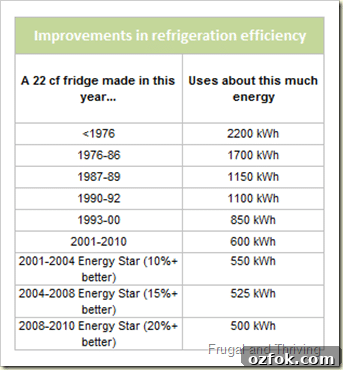
- When replacing a fridge, choose the smallest model that meets your household needs. Bigger isn’t always better when it comes to energy use.
- Check door seals regularly. Close the door on a piece of paper so it sits half in and half out; you shouldn’t be able to pull the paper out easily. Clean or replace seals if they leak.
- Keep the fridge reasonably full. A well-stocked fridge retains cold better, but avoid overpacking so air can circulate around items.
- Set the fridge temperature between 2°C and 4°C. Colder settings waste energy without extending food life significantly.
- Place the fridge away from heat sources such as ovens, dishwashers or direct sunlight to reduce compressor workload.
- Leave at least 5cm space around the fridge for adequate airflow and cooling.
- Clean dust from under and behind the fridge, and gently remove buildup from the compressor area to help it run efficiently.
- If your fridge has an anti-sweat switch, turn it off if you don’t need it—those heaters consume extra power.
- Minimise how often and how long the fridge door is open. An organized layout makes items easier to find quickly.
- Cool leftovers on the bench before refrigerating. Hot food forces the fridge to work harder and raises internal temperature.
- Cover food to reduce moisture release, which otherwise makes the fridge run more to remove excess humidity.
Saving money on freezing food
- Keep the freezer full. A full freezer uses energy more efficiently; fill gaps with containers or bottles three-quarters full of water to maintain cold mass. A full unit also preserves food longer during a power outage.
- Set the freezer temperature between −17°C and −10°C to balance food safety with energy use.
- If your freezer isn’t frost-free, defrost it regularly. Don’t let ice build up beyond about 5cm, which reduces efficiency.
- If you have a separate freezer, consider a chest-style model—chest freezers are typically more energy efficient than upright units.
- Place a bowl of ice in the freezer before leaving home. If it melts and refreezes into a single blob, you’ve likely had an extended power outage and the food may be spoiled.
- For long trips, plan to use what’s in the freezer or turn the unit off while you are away to avoid wasting energy on food you won’t use.
If all else fails, an extreme option is living without refrigeration. Some people choose to live sans-fridge and adopt preservation techniques like curing, fermenting, salting and drying. Historically, people managed without refrigeration for millennia, and the domestic refrigerator only became common in households in the early 20th century.
That said, most modern households will find it impractical to eliminate refrigeration entirely. A more realistic approach is to use a combination of efficient appliances, sensible temperatures and good habits: check door seals, avoid unnecessary cold space, keep units well maintained and stocked appropriately.
Would you ever consider living without refrigeration?