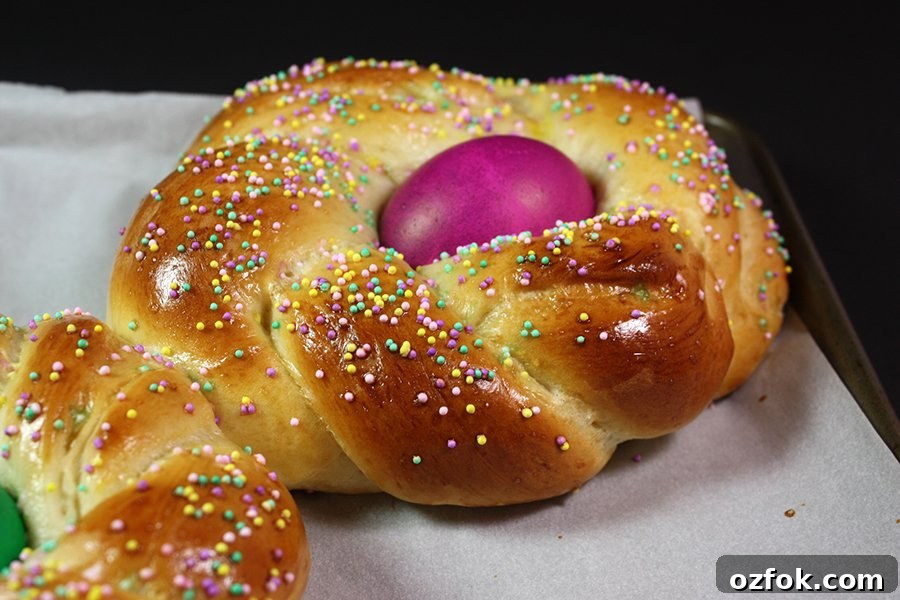
Italian Easter Bread, or Pane di Pasqua, is a lightly sweet braided loaf with an exceptionally soft, airy crumb and a golden crust.
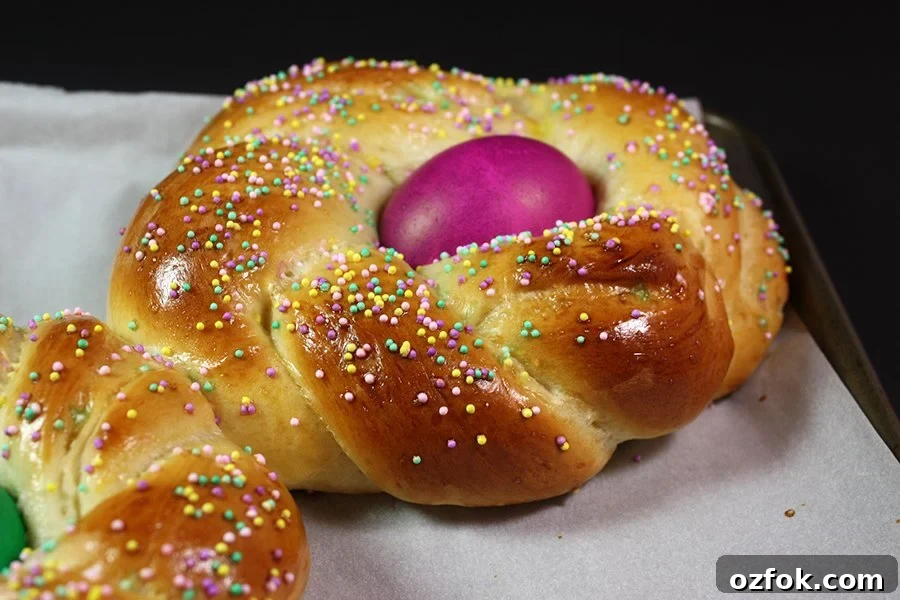
This bread is similar in texture to challah, and it’s easier to make than many expect. If you’ve been hesitant to try enriched doughs, this recipe is a friendly introduction: straightforward steps yield a beautiful result.
I was surprised by how pretty the finished loaves looked. I even called my family to the kitchen to admire the golden braids.
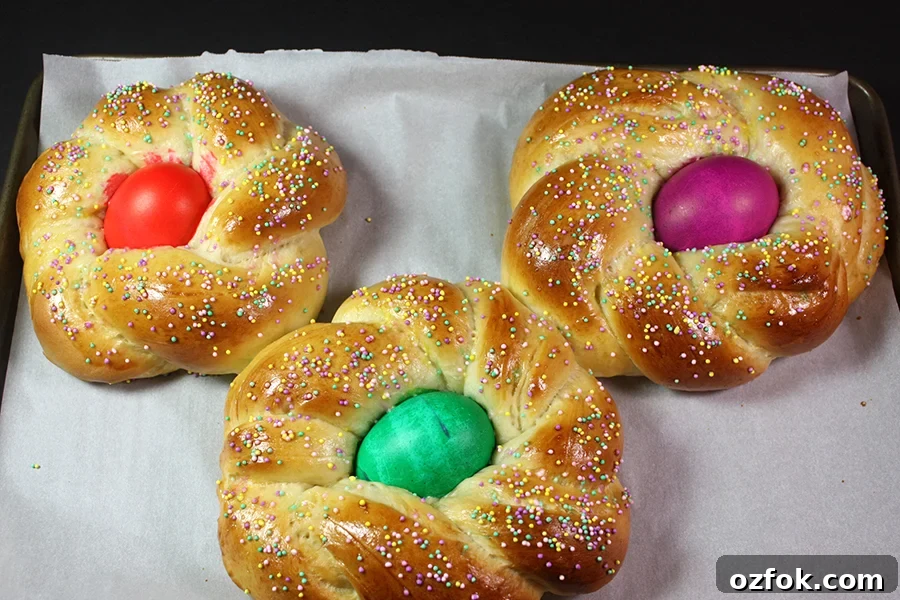
These wreath-shaped loaves impress on sight and taste. The soft interior, slightly sweet flavor, and festive presentation make them perfect for holiday mornings.
They’re easier to make than they look—simple braiding techniques transform small ropes of dough into elegant little nests.
Tips
- Measure flour accurately: aerate, spoon into the cup, and level off for consistent dough texture.
- Warm milk and melted butter work best for this enriched dough, so you don’t need to bring ingredients to room temperature first. Keep the milk between 120–130°F when warming.
- If the loaves brown too quickly in the oven, loosely tent them with aluminum foil to prevent overbrowning while they finish baking.
How to Make Italian Easter Bread
Start by warming milk and butter: combine them in a small saucepan and heat to 120–130°F, stirring until the butter melts. Avoid overheating.
In the bowl of a stand mixer, mix yeast, salt, eggs, and sugar. Add the warm milk and butter mixture.
Add 2 cups of flour and fit the mixer with a dough hook. Mix on medium speed until smooth, about 2 minutes, scraping the bowl as needed.
Gradually add the remaining 2 cups of flour while kneading on medium-low. Knead until the dough is smooth, firm, and no longer sticky—about 12–15 minutes total. The dough should hold its shape when formed into a ball.
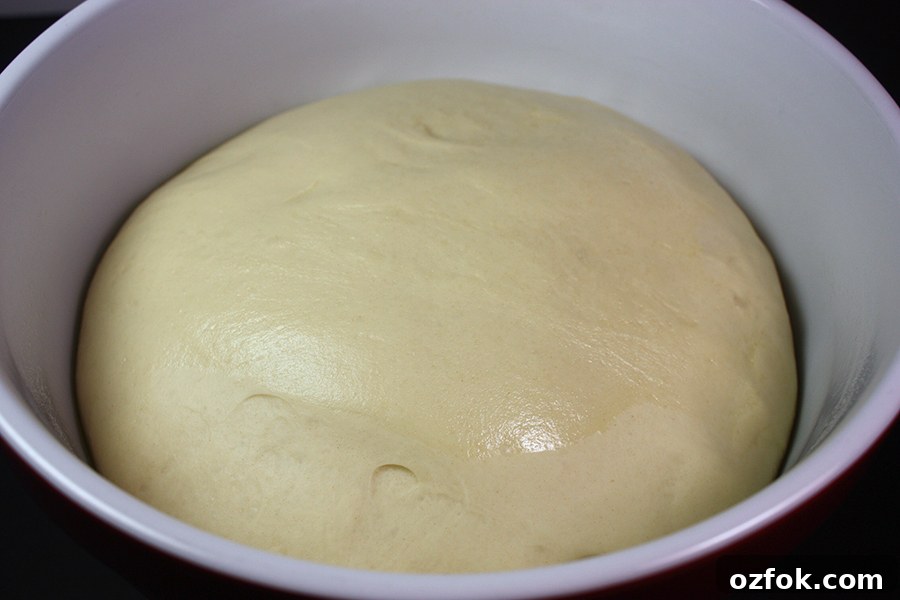
Place the dough ball in a lightly greased bowl, cover with plastic wrap, and let rise in a warm spot until doubled in size, about 1 hour.
While the dough rises, dye raw eggs if you plan to bake them into the loaves; they will cook in the oven. Mix about 1/2 cup room-temperature water with 1 tablespoon vinegar and food coloring for each dye bath, and allow eggs to dry fully before using.
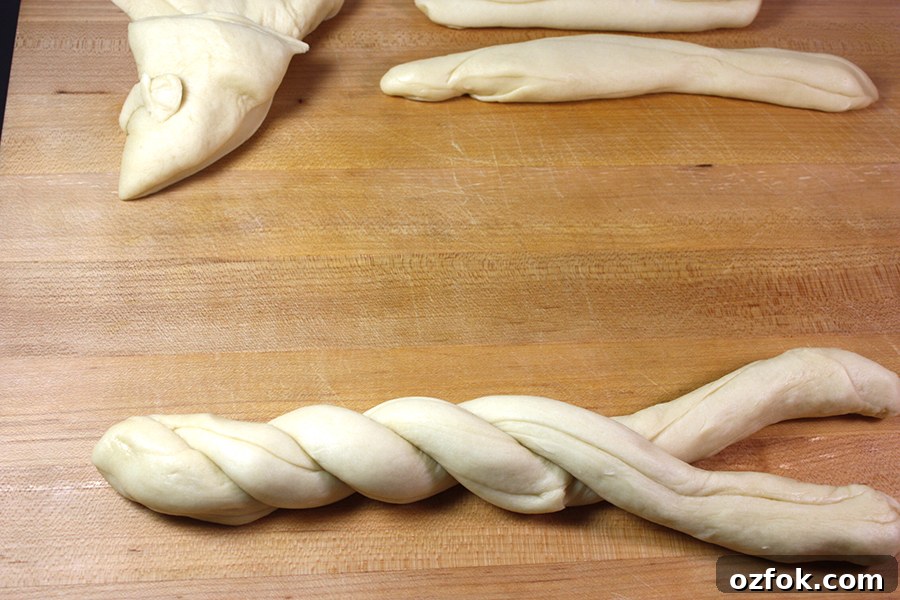
After the first rise, punch the dough down and divide it into 12 equal pieces.
Roll each piece into a 1-inch-thick rope about 14 inches long. Avoid using too much extra flour while rolling; excess flour makes the dough heavy.
Pair the ropes and twist each pair together to form a braid, pinch the ends, and join them into a circular nest. Place each finished ring on a parchment-lined baking sheet.
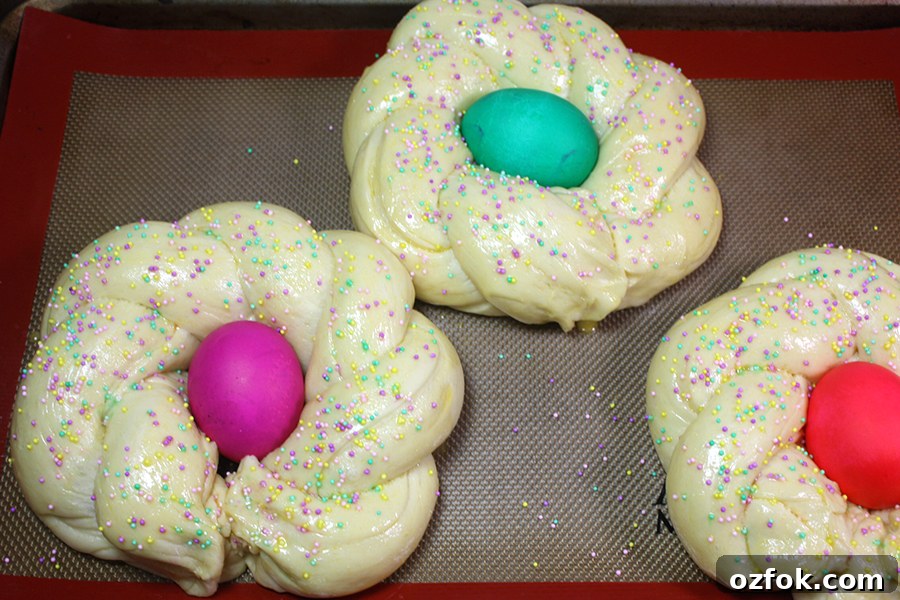
Cover the shaped rings loosely and let them rise until doubled, about 1 hour.
Brush each ring with egg wash, sprinkle with colored sprinkles if desired, and carefully nestle one dyed egg in the center of each ring.
The individual wreaths are charming, but you can also shape one large braided loaf if you prefer. Sweet, enriched breads like this always make a festive addition to holiday breakfasts or brunches.
Happy Easter!
FAQ
Yes. Make the dough one day ahead and store it tightly wrapped in the refrigerator overnight. The next day, bring it to room temperature, shape the nests, and proceed with the final rise. Alternatively, shape the nests and refrigerate them covered overnight; remove them, let them come to room temperature, complete the final rise, and bake.
Yes, the shaped dough can be frozen. Freeze individual shaped nests on a parchment-lined sheet for about an hour until firm, then wrap each one tightly in plastic wrap and place in a freezer-safe bag. Thaw in the refrigerator overnight, bring to room temperature, allow the final rise, and bake as directed.
More Delicious Italian Recipes
- Panettone Recipe
- Italian Sesame Seed Cookies (Biscotti Regina)
- Italian Ricotta Cookies Recipe
- Italian Bread Recipe
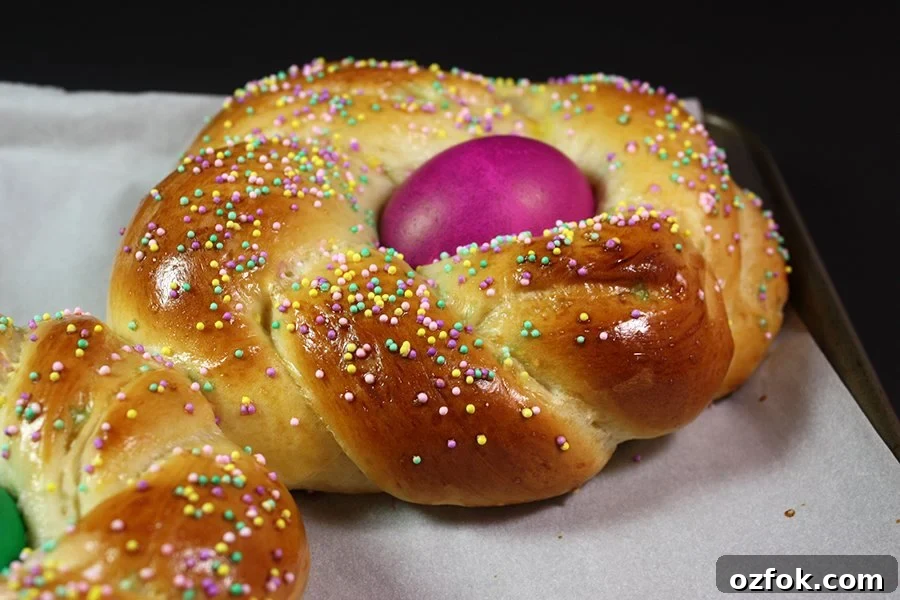
Italian Easter Bread Recipe
Print
Pin
Rate
Ingredients
- 2 1/4 teaspoons rapid rise instant yeast (1 package)
- 1-1/4 cup milk
- 1/4 teaspoon salt
- 1/3 cup unsalted butter
- 2 large eggs, beaten
- 1/2 cup granulated sugar
- 4 cups all-purpose flour (more as needed for dusting and kneading)
- Vegetable cooking spray or oil for greasing the proofing bowl
- 1 large egg, beaten with 1 teaspoon water (egg wash)
- 6 dyed Easter eggs raw eggs are fine; they will cook as the bread bakes
- Colored sprinkles
Instructions
-
Warm the milk and butter in a small saucepan to 120–130°F, stirring until the butter melts. Do not let the milk exceed 130°F.
-
In the stand mixer bowl, combine yeast, salt, beaten eggs, and sugar. Add the warmed milk and butter. Add 2 cups of flour and mix with a dough hook on medium speed until smooth, about 2 minutes, scraping the sides as needed.
-
Slowly add the remaining 2 cups of flour and knead on medium-low until the dough is smooth and no longer sticky, about 12–15 minutes. Shape into a ball, place in a lightly greased bowl, cover with plastic wrap, and let rise in a warm place until doubled, about 1 hour.
-
Punch the dough down and divide it into 12 pieces. Roll each piece into a 1-inch rope about 14 inches long. Take two ropes, twist them together, pinch the ends, and form a circle to create a braid-shaped wreath.
-
Place the shaped rings on parchment-lined baking sheets (about 3 per sheet), loosely cover with plastic wrap, and allow to rise until doubled, about 1 hour.
-
Brush each ring with egg wash, add sprinkles if desired, and gently set one dyed Easter egg in the center of each ring.
-
Bake at 350°F until golden brown, about 18–20 minutes. Transfer to a cooling rack and enjoy.
Notes
Nutrition values include the dyed eggs baked inside the loaves.