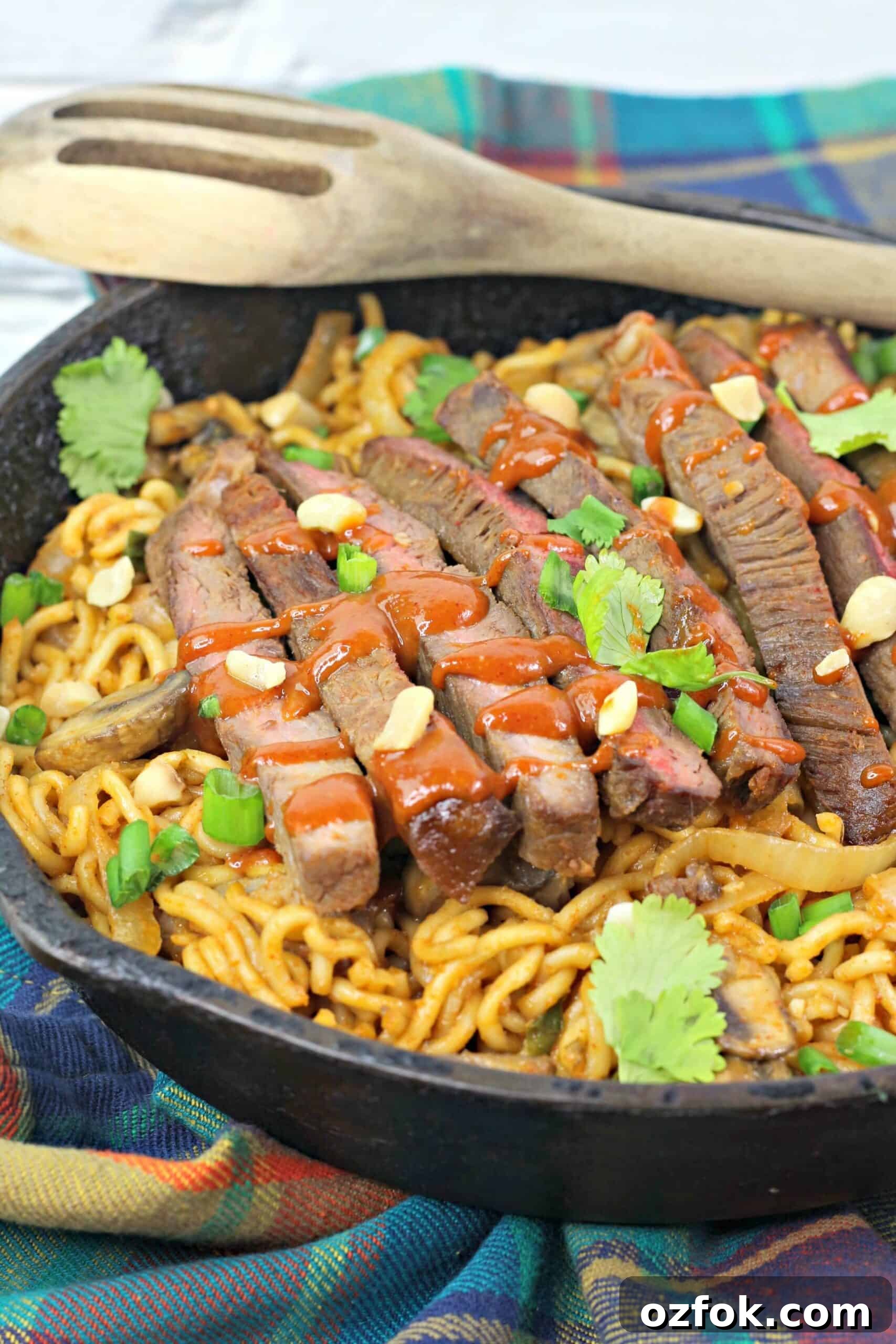
Korean spicy noodles are a vibrant, flavorful dish that’s perfect when you want to spice up weeknight dinners. Loved by fans of Asian cuisine, this recipe combines chewy noodles, tender beef, vegetables, and a bold gochujang-based sauce. It’s packed with flavor yet simple enough for cooks of all levels.
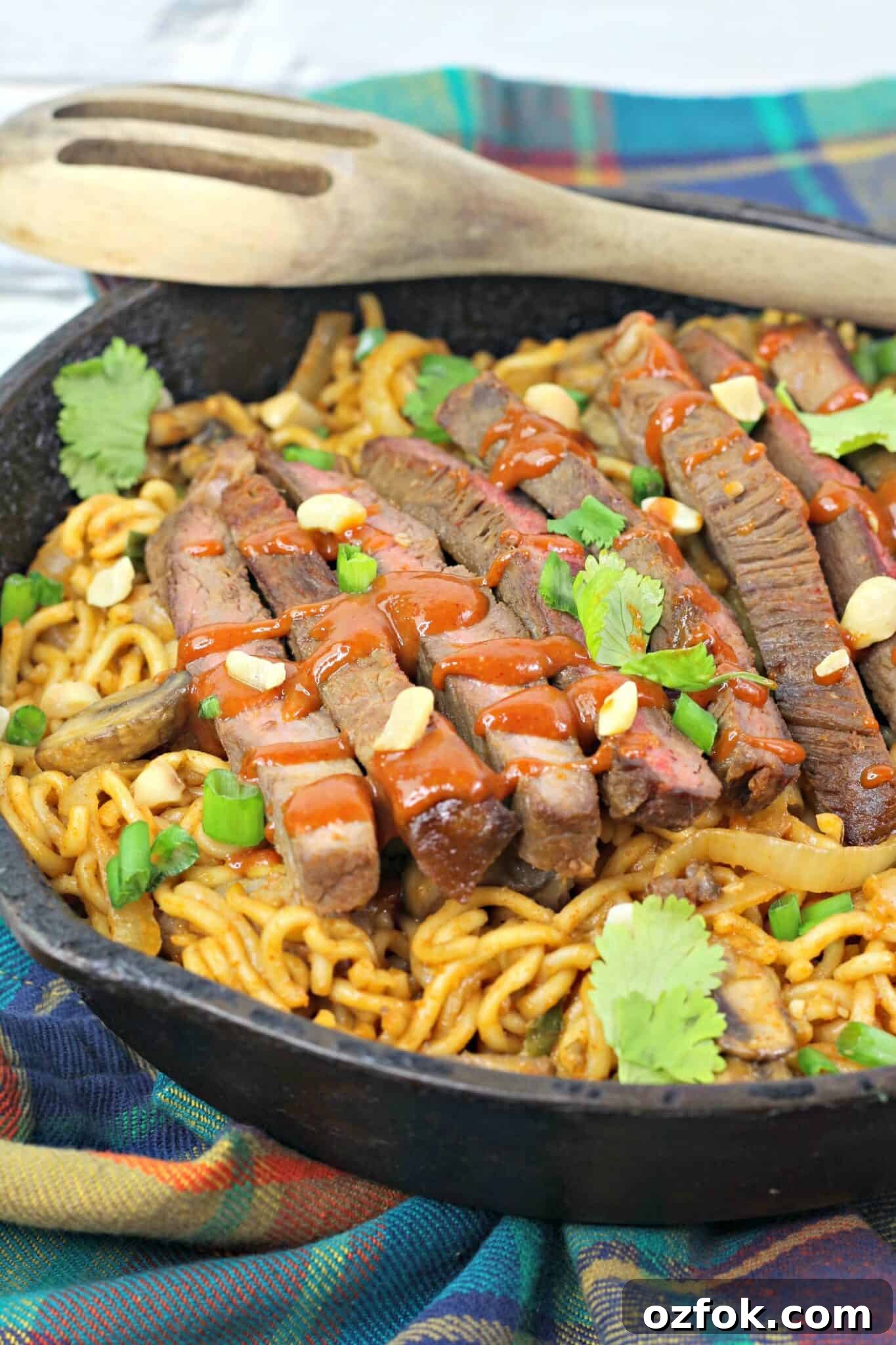
Originating from Korea and inspired by popular bibim-style noodles, this dish balances savory, sweet, and spicy elements. The combination of a fermented chili paste, aromatic aromatics, and a touch of sweetness creates a complex sauce that clings to ramen or your choice of noodle. Whether you want a quick weeknight meal, a make-ahead lunch, or something to share, these spicy noodles deliver.
The recipe is adaptable: swap the noodles for udon, rice noodles, or glass noodles; use tofu or chicken instead of beef; reduce the spice for milder palates or increase it for more heat. It also reheats well, making it a great option for leftovers and meal prep.
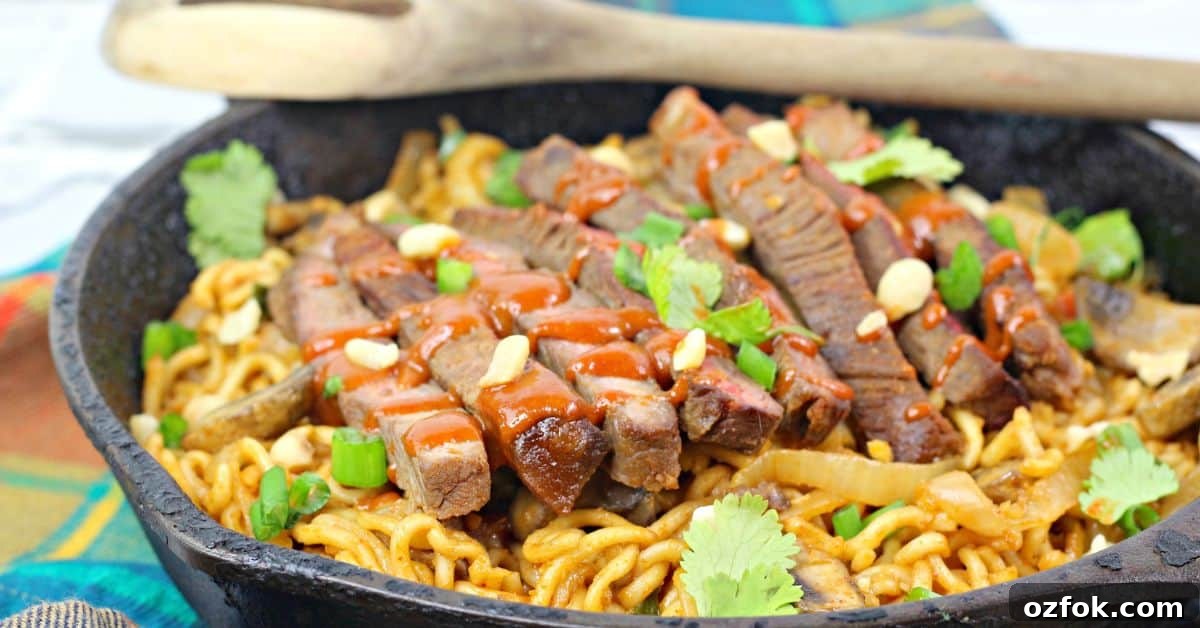
Why We Love Bibim Noodles
Bibim noodles are versatile and easy to personalize. They bring together contrasting textures—tender meat, crisp vegetables, and chewy noodles—with a sauce that is both bold and comforting.
- Family friendly: The sweet-savory-spicy profile appeals to many tastes and can be toned down for kids or guests who prefer less heat.
- Adaptable: Use different noodles (ramen, udon, glass, or rice noodles) and adjust proteins or make it vegetarian with tofu and extra vegetables.
- Makes great leftovers: Flavors deepen overnight, and leftovers reheat well for quick lunches or dinners.
Ingredient Notes
- Steak: Thinly sliced Swiss steak works well, but flank steak, ribeye, or tri-tip are great alternatives. Freeze for 10–15 minutes to make slicing thin easier.
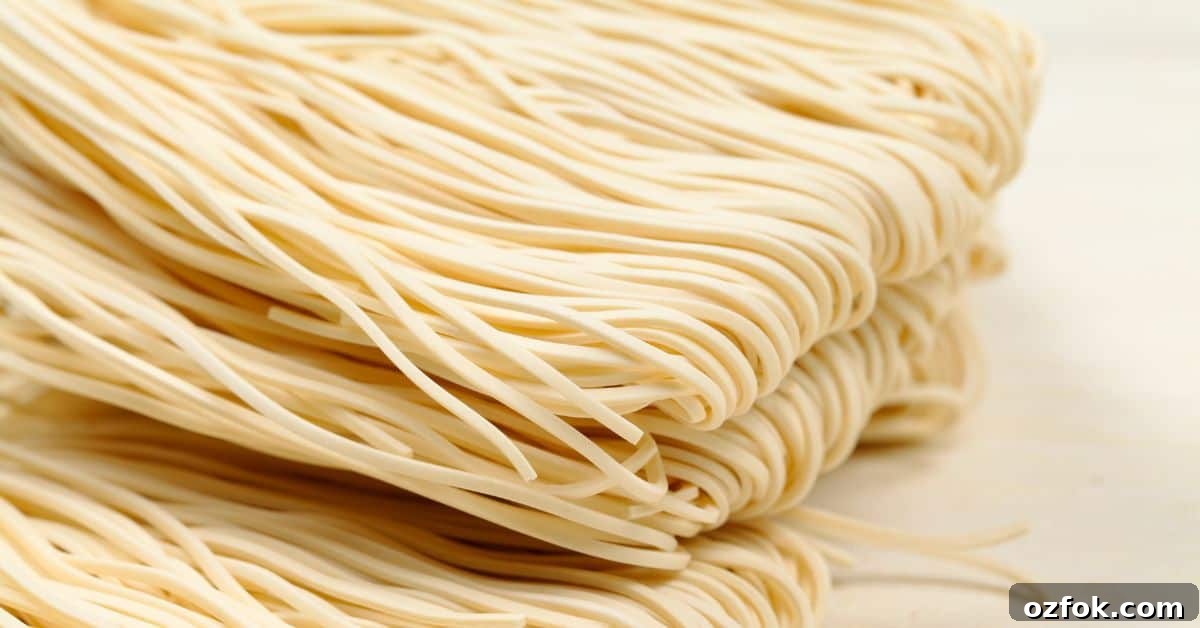
- Ramen or noodles: Beef-flavored instant ramen is convenient, but any noodle you prefer will work—adjust cooking times accordingly.
- Gochujang: Korean chili paste gives the sauce its signature flavor—if unavailable, a combination of chili paste and a touch of sweetener can be used, though the final flavor will vary.
Variations and Substitutions
This recipe is easy to adapt to what you have on hand. Try these simple swaps to suit dietary needs or preferences.
- Chili paste: Gochujang is recommended for an authentic flavor. For a milder or different chili profile, use sriracha or chili bean paste and balance with a bit of brown sugar or honey.
- Vegetables: Add bell peppers, carrots, bok choy, or spinach for extra color and nutrition.
- Vinegar: If you don’t have rice vinegar, apple cider vinegar is a reasonable substitute with a similar tang.
How to Make Korean Spicy Noodles
The dish comes together in a few straightforward steps: make the sauce, marinate the beef, cook the meat, then cook the noodles and vegetables with the remaining sauce. Finish by slicing the steak and tossing everything together.
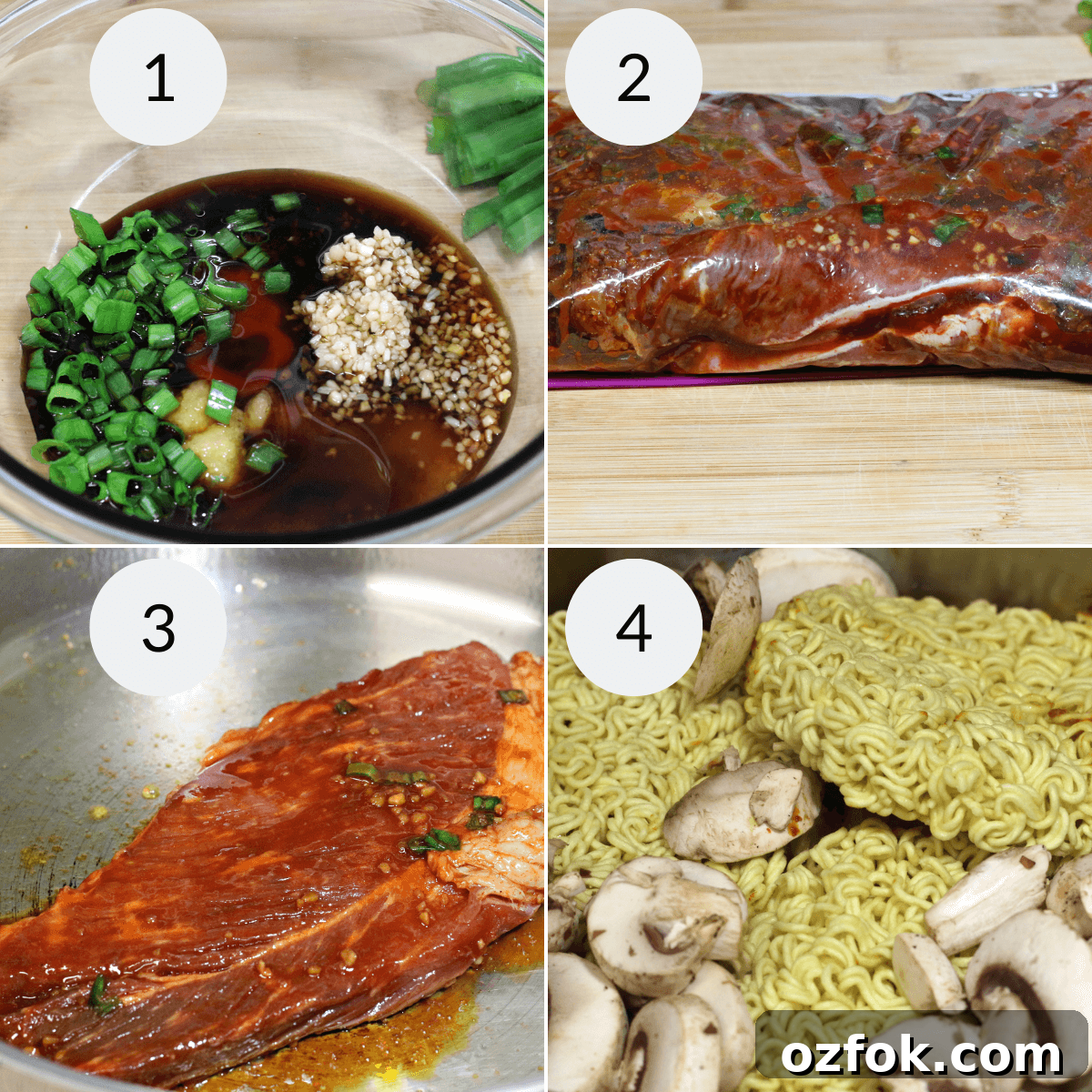
Step 1: Prepare the Sauce and Marinate
Whisk gochujang, sliced green onions, soy sauce, rice vinegar, minced garlic, ground ginger, sesame oil, and sugar until smooth. Reserve half the sauce in the refrigerator and place the other half with the sliced steak in a sealed bag. Chill for at least 30 minutes, or overnight for deeper flavor.
Step 2: Cook the Steak
Heat oil in a large pan over medium heat. Remove steak from the bag and sear for 5–8 minutes until browned and cooked through. Transfer to a cutting board and let rest briefly.
Step 3: Cook Vegetables and Noodles
In the same pan, add sliced onion, mushrooms, the ramen (or chosen noodles), the seasoning packet (if using instant ramen), and the reserved sauce. Add the amount of water indicated for the noodles and bring to a simmer. Cook 5–7 minutes or until the noodles are tender, stirring occasionally.
Step 4: Finish and Serve
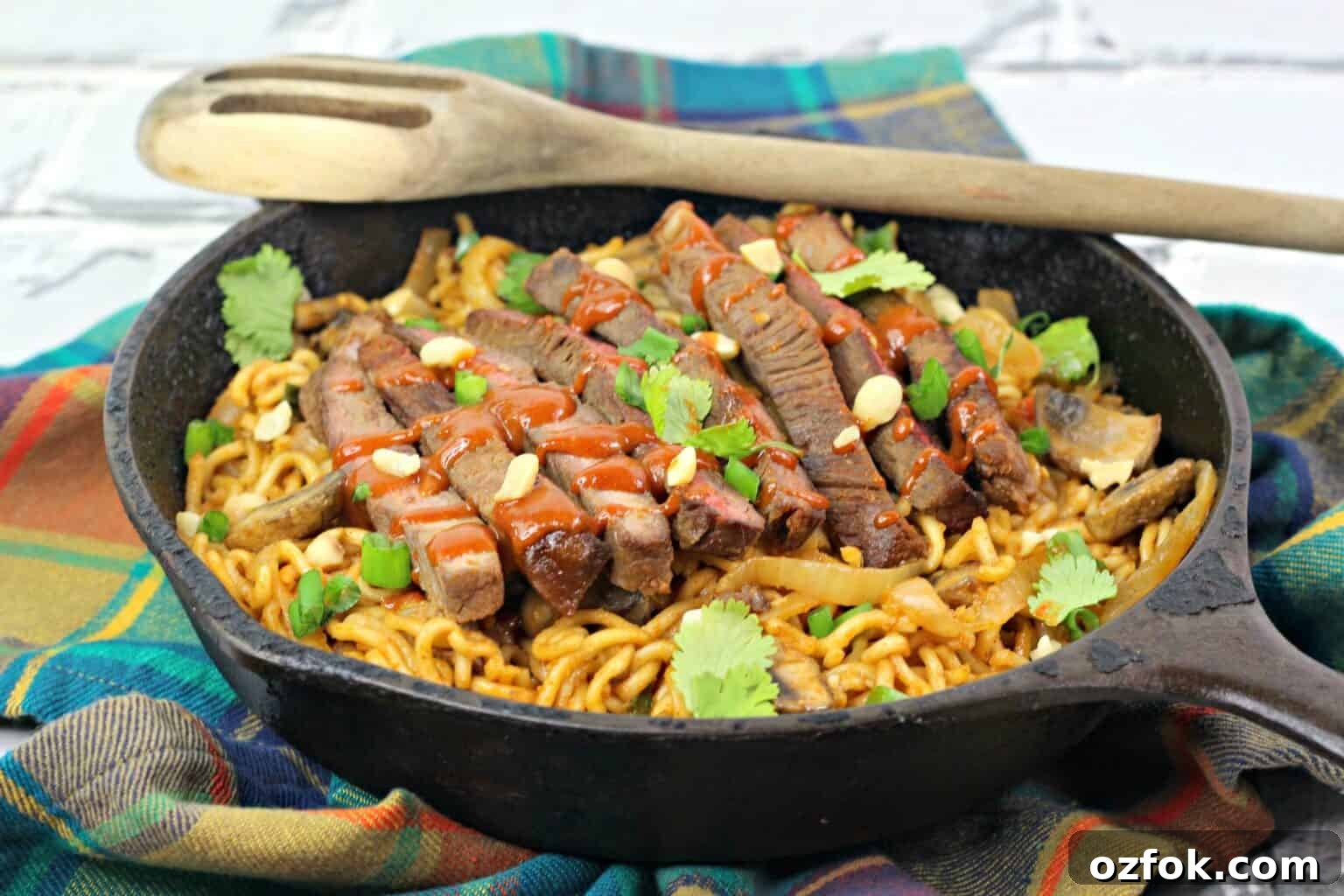
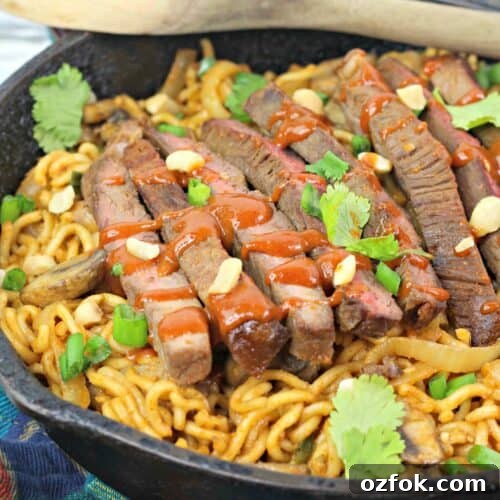
Slice the steak into 1/2-inch pieces. Add the sliced steak and any remaining sauce to the pan, stir to combine, and heat through. Garnish with green onions, sesame seeds, or optional kimchi. Serve hot.
Recipe FAQs
Yes—use low-sodium soy sauce and lean cuts of beef or swap in tofu and extra vegetables to reduce fat and sodium.
Rice typically has less sodium and can be higher in fiber, depending on the variety. Both noodles and rice can fit into a balanced diet when enjoyed in moderation.
Allow to cool, then refrigerate in an airtight container for up to 5 days.
Reheat in a frying pan over medium-high heat until warmed through, or microwave in short intervals, stirring between to ensure even heating.
Expert Tips
Use these easy tips to get the best results every time.
- Freeze the steak briefly: Firming the meat helps you slice ultra-thin pieces for quick, even cooking.
- Garnishes: Sesame seeds, sliced green onions, kimchi, or crushed red pepper add texture and extra flavor.
- Add bok choy: Baby bok choy or napa cabbage are classic, mild additions that pair well with the spicy sauce.
- Protein swaps: Try chicken, pork, or firm tofu to vary the dish.
What to Serve With Korean Spicy Noodles
- Bulgogi or other grilled meats
- Simple homemade kimchi or store-bought kimchi
- Spring rolls or a light cucumber salad to balance the heat
Korean Spicy Noodles
Equipment
- Whisk
- Small bowl
- Zip-top bag or container
- Large pan or wok
Ingredients
- 3 pounds Swiss steak, room temperature (or substitute flank/ribeye)
- 2 tablespoons oil
- 4 tablespoons gochujang (Korean chili paste)
- 2 tablespoons thinly sliced green onions
- 2 tablespoons soy sauce
- 2 tablespoons rice vinegar
- 3 tablespoons minced garlic
- 1 teaspoon ground ginger
- 1 tablespoon sesame oil
- 4 teaspoons sugar
- 3 packages beef ramen (include seasoning packet and 2 cups water per package) or 3 servings of your preferred noodles
- ½ white onion, thinly sliced
- ½ cup sliced mushrooms
Instructions
- Whisk gochujang, green onions, soy sauce, rice vinegar, garlic, ginger, sesame oil, and sugar until combined.
- Divide sauce in half. Place half with the steak in a sealed bag and refrigerate 30 minutes to overnight. Cover and chill the other half.
- Heat oil in a large pan over medium heat. Remove steak from bag and cook 5–8 minutes until browned and cooked through. Transfer to a cutting board.
- Add onions, mushrooms, noodles, ramen seasoning, and reserved sauce to the pan. Add water as needed and simmer until noodles are tender, about 5–7 minutes.
- Slice steak into 1/2-inch pieces, return to the pan with any remaining sauce, and heat through. Garnish with green onions or sesame seeds.
Notes
- Freeze steak briefly to make thin slicing easier.
- Garnish with sesame seeds or kimchi for extra flavor.
- Bok choy or napa cabbage are excellent vegetable additions.
Nutrition (per serving)
Calories: 862 kcal • Carbohydrates: 14 g • Protein: 71 g • Fat: 59 g • Sodium: 701 mg
The nutritional information is an estimate. Verify with your preferred resource if needed.
This recipe is a personal, adapted version inspired by Korean flavors rather than an attempt at strict authenticity. Ingredients and techniques have been adjusted for accessibility and ease while preserving the bold taste that makes this dish enjoyable. Experiment with variations to make the recipe your own and discover the flavor combinations you prefer.