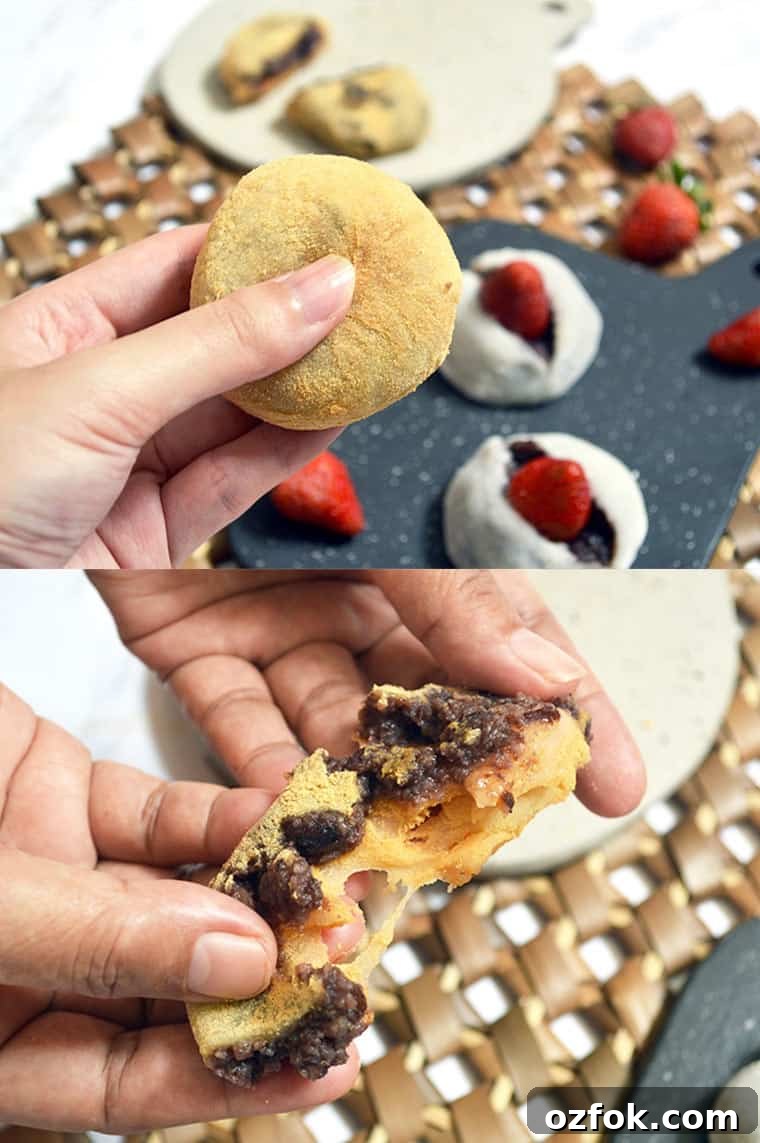
Sticky, chewy round mochi filled with sweet red bean paste and lightly dusted with kinako. This recipe guides you to make irresistible Red Bean Mochi with Kinako at home using a quick stovetop steaming method.
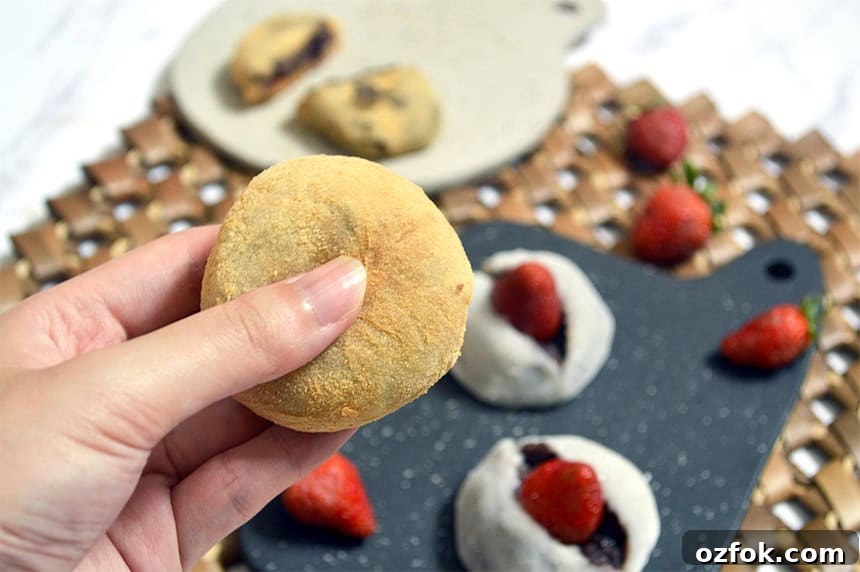
Food wasn’t the only reason I traveled to Japan, but it was a major part of the experience. During my recent trip I explored many aspects of Japanese cuisine and culture. One of the most memorable treats I discovered was mochi: its uniquely chewy texture and subtle rice flavor left a lasting impression.
Red Bean Mochi with Kinako is my current favorite. The blend of sweet red bean paste, toasted soybean flour (kinako), and soft mochi hits the perfect balance of texture and flavor. Here I’ll show you how to make soft, chewy mochi at home with simple ingredients and an easy steaming technique.
About Mochi
Mochi is a traditional Japanese rice cake often associated with New Year celebrations, but enjoyed year-round in many forms and flavors. Made from short-grain glutinous rice or glutinous rice flour, mochi is naturally white, sticky, elastic, and chewy. Eaten plain, it retains a mild rice flavor, but it also takes well to various fillings and coatings.
About Red Bean Mochi with Kinako
On a visit to Nara I watched mochi made the traditional way using wooden mallets in a lively mochitsuki ceremony. The rhythmic pounding transforms steamed glutinous rice into a smooth, stretchy mass. The spectacle draws crowds, and the result—fresh, warm mochi—is unforgettable.
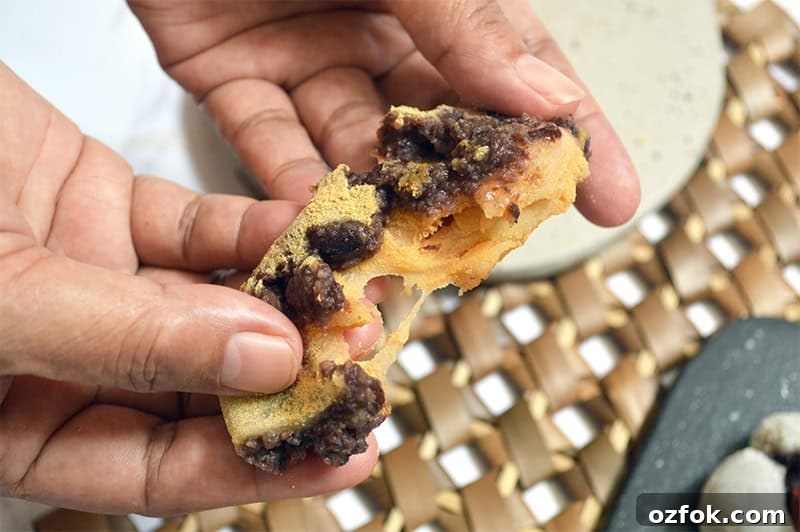
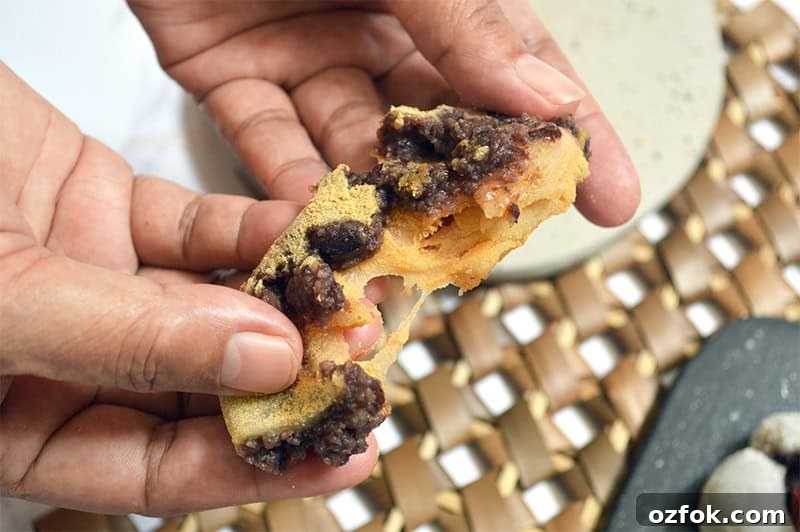
One shop I loved specializes in yomogi mochi, made with Japanese mugwort, filled with sweet red bean paste, and dusted with kinako (roasted soybean flour). Served warm and chewy, it was as soft as melted marshmallow. I wanted to recreate that experience at home, so I adapted daifuku recipes to make kinako-coated red bean mochi. I left out mugwort because it wasn’t available locally; the mochi remained delicious though it turned out plain white rather than green.
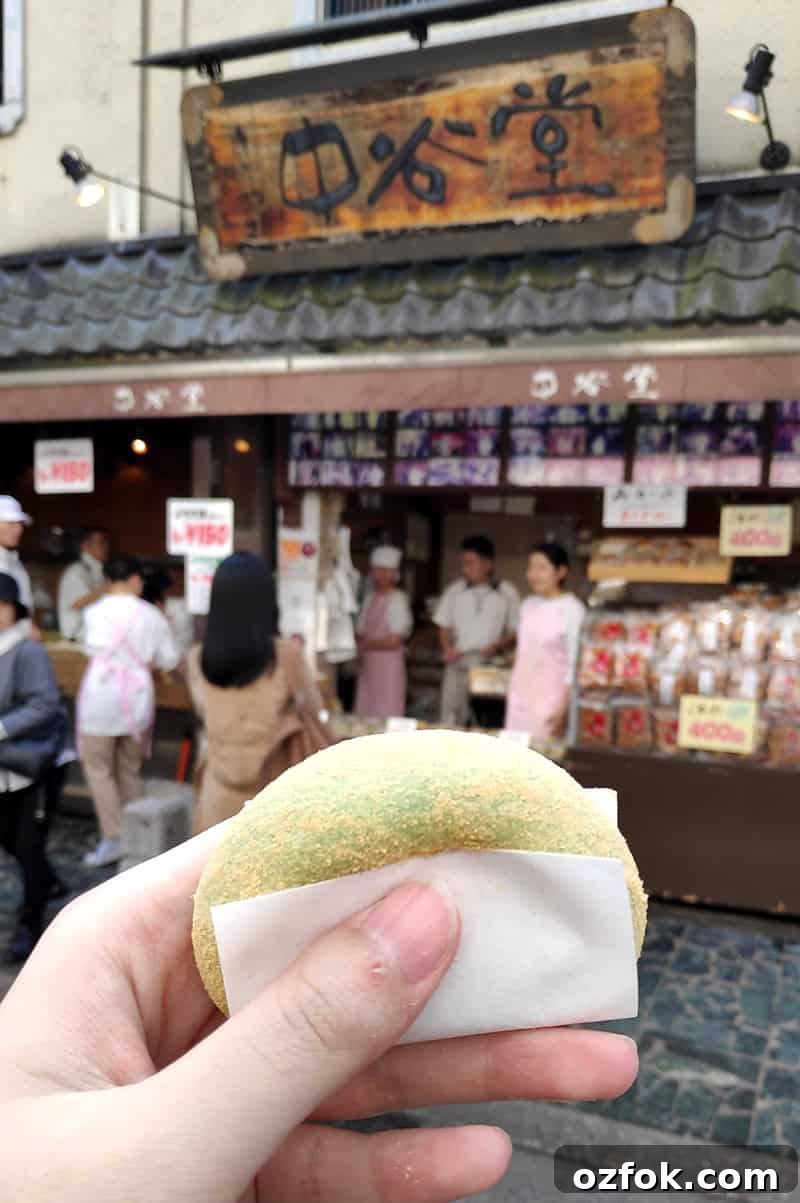
That fresh mochi inspired me to try making daifuku at home for the first time. I followed a basic daifuku approach—glutinous rice flour, water, and sugar—then steamed the mixture until smooth and elastic. I coated and shaped the mochi with kinako instead of cornstarch for a classic toasted-soy flavor and used sweet red bean paste for the filling.
About Kinako
Kinako is made by finely grinding roasted soybeans into a pale yellow powder. It’s commonly used in Japanese sweets such as dango, wagashi, and mochi. Kinako has a nutty, slightly roasted flavor that’s similar to toasted peanuts and adds a pleasant aroma and texture when dusted on mochi.
You can buy kinako at Japanese grocery stores or prepare it at home by roasting soybeans in a pan until golden brown and then grinding them in a food processor until powdery.
How to Make Red Bean Mochi with Kinako
Making mochi from glutinous rice flour is straightforward. Combine glutinous rice flour, water, and sugar, then steam until the mixture becomes opaque, smooth, and elastic. The shaping and filling step requires patience because the dough is sticky, but coating the work surface with kinako helps. The finished mochi should be soft, chewy, and pleasantly springy.
1. Make the mochi
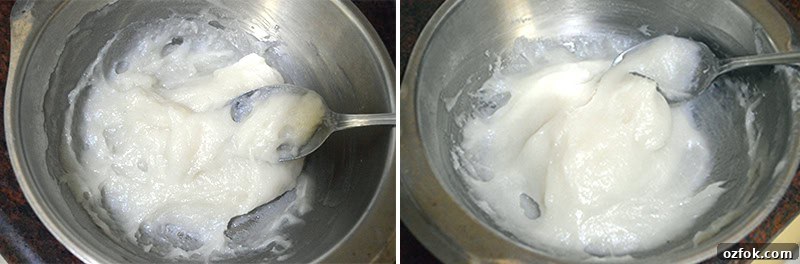
Traditionally mochi is made by steaming and pounding whole glutinous rice. For home cooks, glutinous rice flour (mochiko) simplifies the process. Mix glutinous rice flour with water and sugar, then steam or cook on the stovetop, stirring halfway through, until the mixture turns opaque and becomes smooth and sticky.
I use a steamer: place the bowl with the mixture in the steamer, cover the lid with a towel to catch condensation, and steam for about 15 minutes, stirring once halfway to prevent lumps.
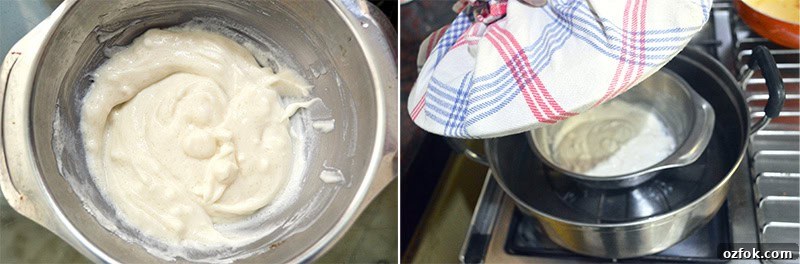
The mixture will go from translucent and lumpy to smooth and opaque after steaming. That smooth, elastic texture indicates the mochi is ready to handle.
2. Shape and fill the mochi
Generously dust your work surface, rolling pin, and hands with kinako to prevent sticking. Transfer the cooked mochi onto the prepared surface and dust the top as well. Once the mochi has cooled enough to handle, divide it into six pieces. Flatten each piece with a rolling pin into a roughly 4-inch (10 cm) round—avoid rolling too thin to prevent tearing. Place about 1 to 1.5 tablespoons of red bean paste in the center of each round.
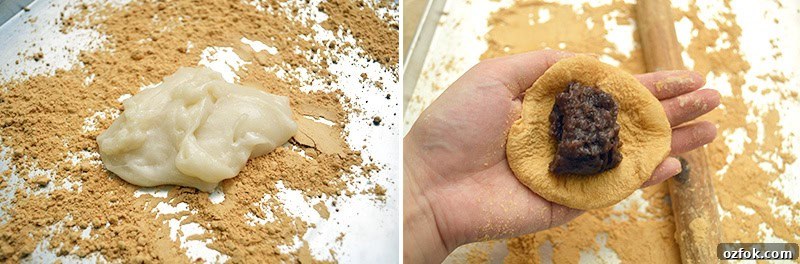
Red bean paste comes in two common textures: chunky (with bean skins and a coarser texture) and smooth (pureed and strained). Both work well; choose the one you prefer. Spoon the filling into the center, then pinch the edges together to seal, pressing seams closed and placing the seam side down. Dust the finished mochi with a little more kinako if desired.

More Japanese Dessert Recipes
Try these other Japanese desserts for more inspiration.
- Dorayaki
- Mitarashi Dango
- Strawberry Mochi
- Matcha Panna Cotta
- Almond White Chocolate Matcha Cookies
Red Bean Mochi with Kinako
Ingredients
- 1/2 cup (75 gr) Mochiko glutinous rice flour
- 1/2 cup (120 ml) water
- 3 tbsp granulated sugar
- 1/4 cup (40 gr) kinako / roasted soybean flour
- 2/3 cup (175 gr) red bean paste
Instructions
-
In a heatproof bowl, mix mochiko, water, and sugar until well combined.
-
Steam the mixture for 15 minutes. Cover the steamer’s lid with a towel to catch condensation. Halfway through, stir the mixture and return it to the steamer to finish cooking. The mochi should become opaque, smooth, and sticky.
-
Cover the work surface with kinako. Transfer the cooked mochi onto the prepared surface.
-
Once it has cooled slightly, dust the mochi, rolling pin, and your hands with kinako. Divide the mochi into six pieces and roll each into a 4-inch / 10 cm round.
-
Place about 1 tablespoon of sweet red bean paste in the center of each round. Pinch the edges together to wrap the filling, then press any remaining seams closed. Serve with the seam side down.