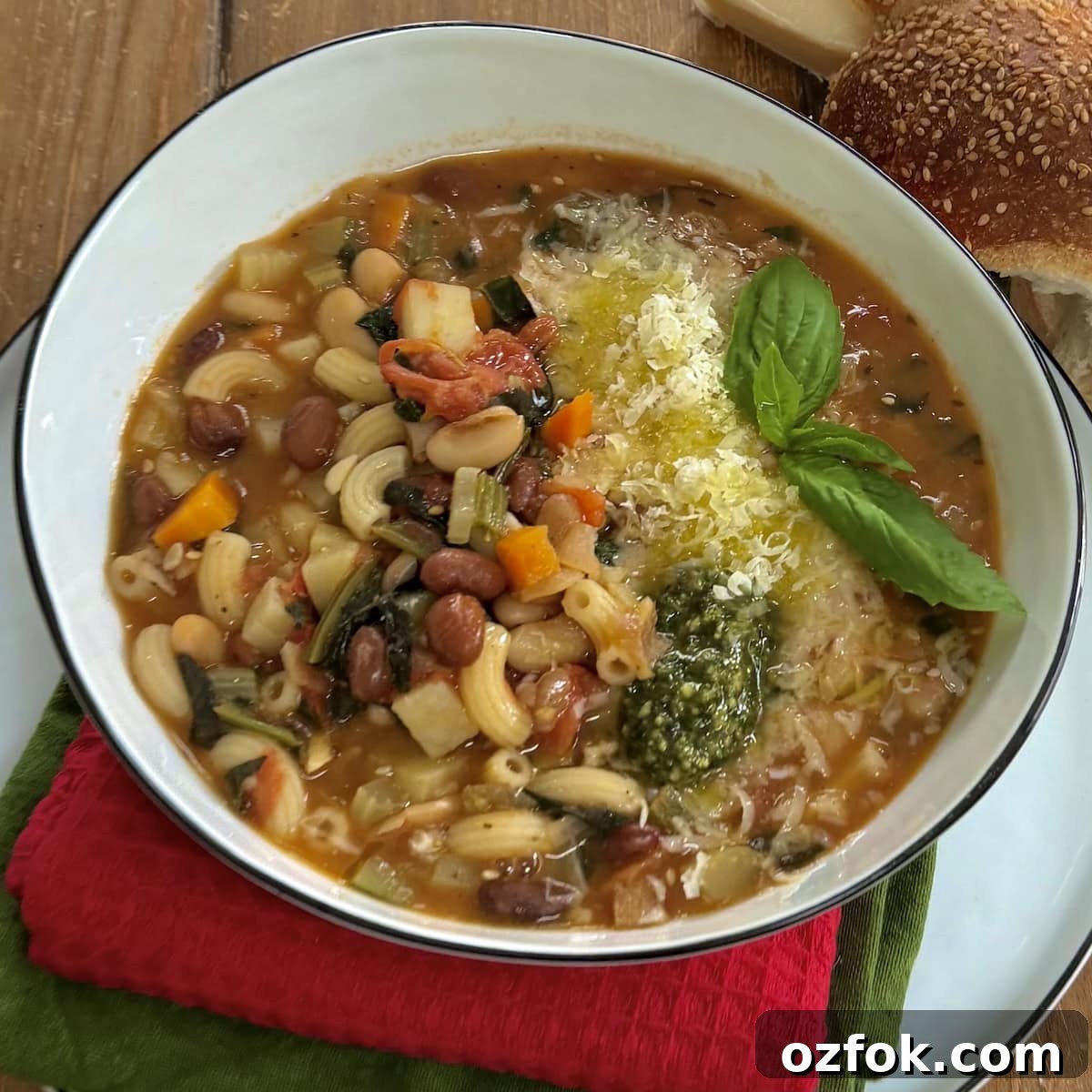
Italian minestrone is a timeless, comforting soup—hearty, flavorful and packed with vegetables, beans and small pasta in a savory tomato-and-herb broth. It’s satisfying year-round and makes a simple vegetarian meal when served with crusty bread.
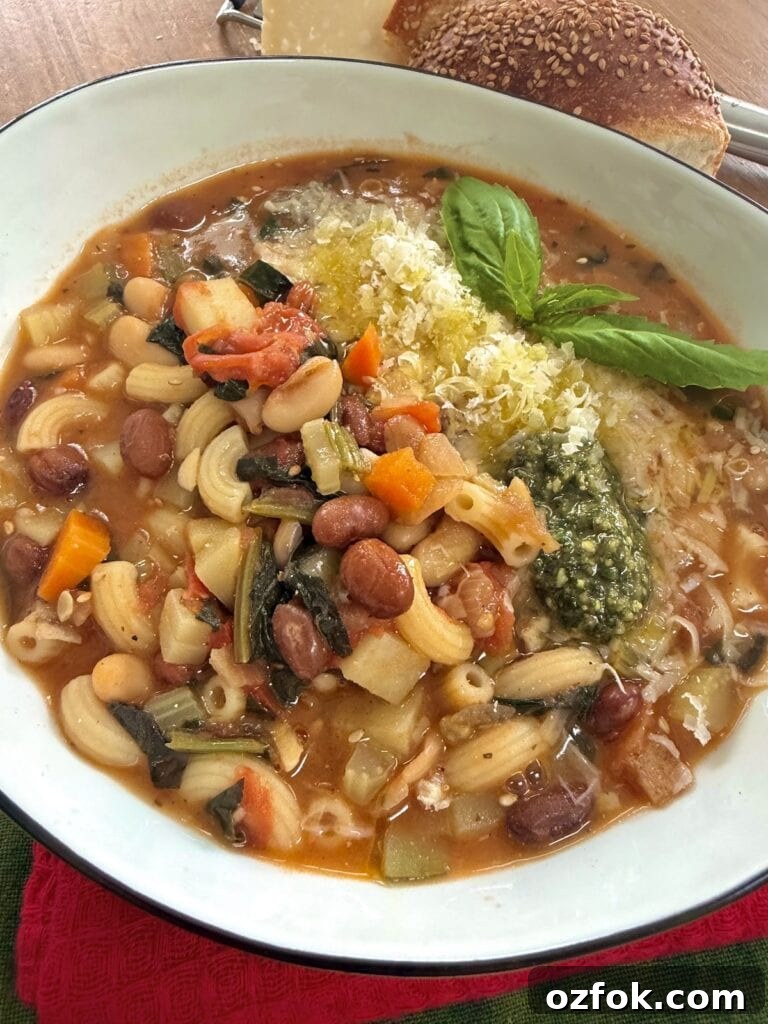
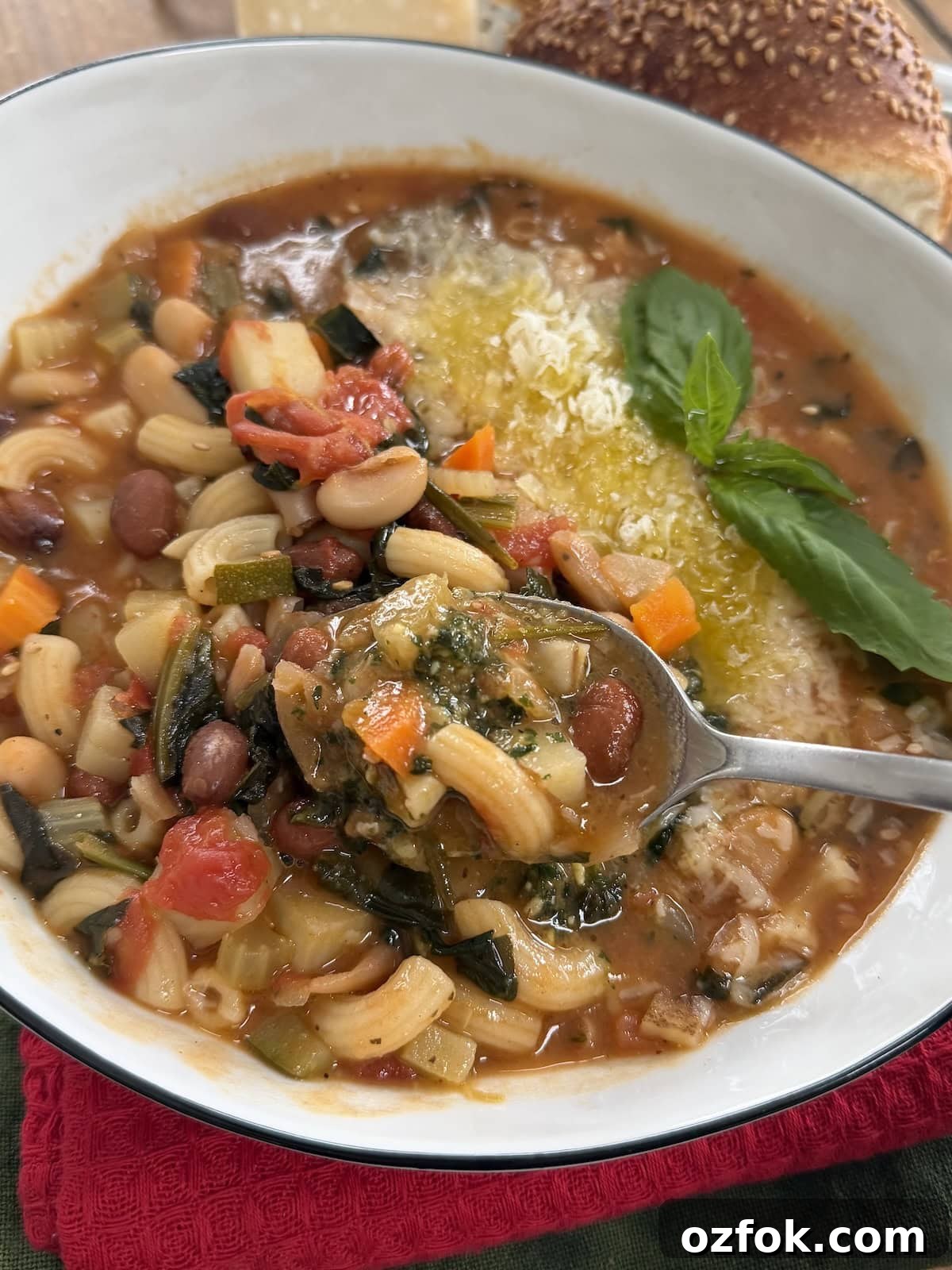
This version is built on a classic mirepoix—onion, carrot and celery—with garlic, crushed tomatoes, beans, potatoes, zucchini, spinach and a little pasta. A parmigiano or pecorino rind simmers in the broth for added depth, and I finish bowls with grated cheese, good extra-virgin olive oil and a spoonful of basil pesto or fresh basil when available.
Minestrone is endlessly adaptable: use whatever vegetables and beans you have on hand. It reflects cucina povera—the idea of making the most of pantry staples and seasonal produce—so don’t worry about exact quantities. Want more beans or less spinach? Adjust to taste.
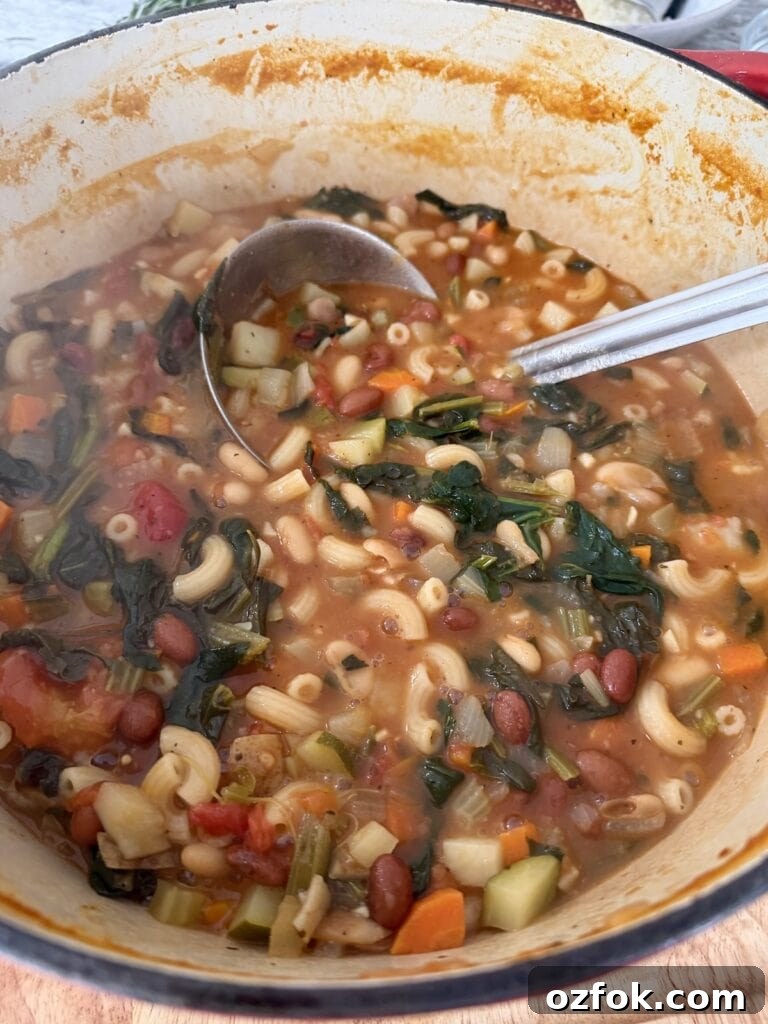
Table of Contents
- Origin of Minestrone
- How to Make Italian Minestrone Soup
- More Italian Soups
- Frequently Asked Questions
- Recipe Substitutions and Variations
- Top Tips for Italian Minestrone Soup
- Serving Suggestions
- Italian Minestrone Soup Recipe
Origin of Minestrone
Minestrone began as a practical Italian dish to use leftovers, seasonal vegetables and pantry staples so nothing went to waste. It embodies cucina povera—simple, resourceful cooking built from what’s available.
Ingredients and textures vary by season and region. Northern versions tend to be thicker and butter-based with root vegetables, cabbage, rice or corn. Southern versions are generally lighter and tomato-based with olive oil, garlic, pasta and Mediterranean vegetables like zucchini and green beans. Regional additions—pesto in Liguria, pork in Tuscany or eggplant in Sicily—reflect local produce and traditions.
The name minestrone literally means “big brothy soup,” which is exactly what it is: nourishing, warming and flexible.
If you enjoy bean-forward dishes, consider other recipes such as greens and beans, tuna-pesto pasta with chickpeas, or escarole and white-bean soup.
How to Make Italian Minestrone Soup
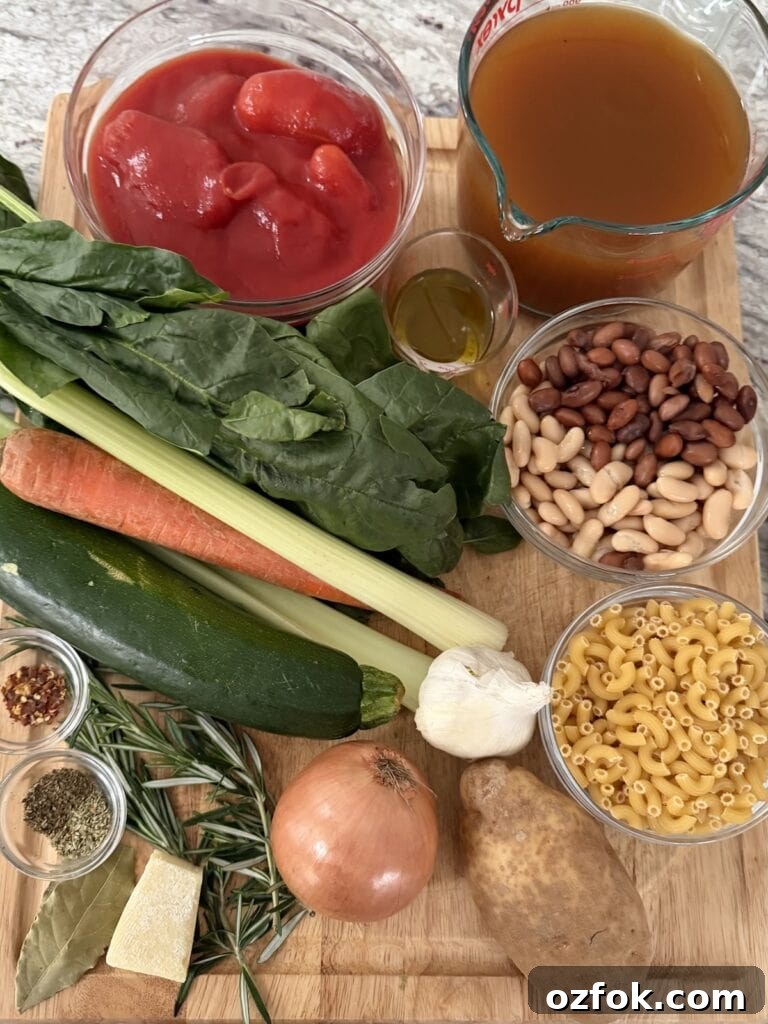
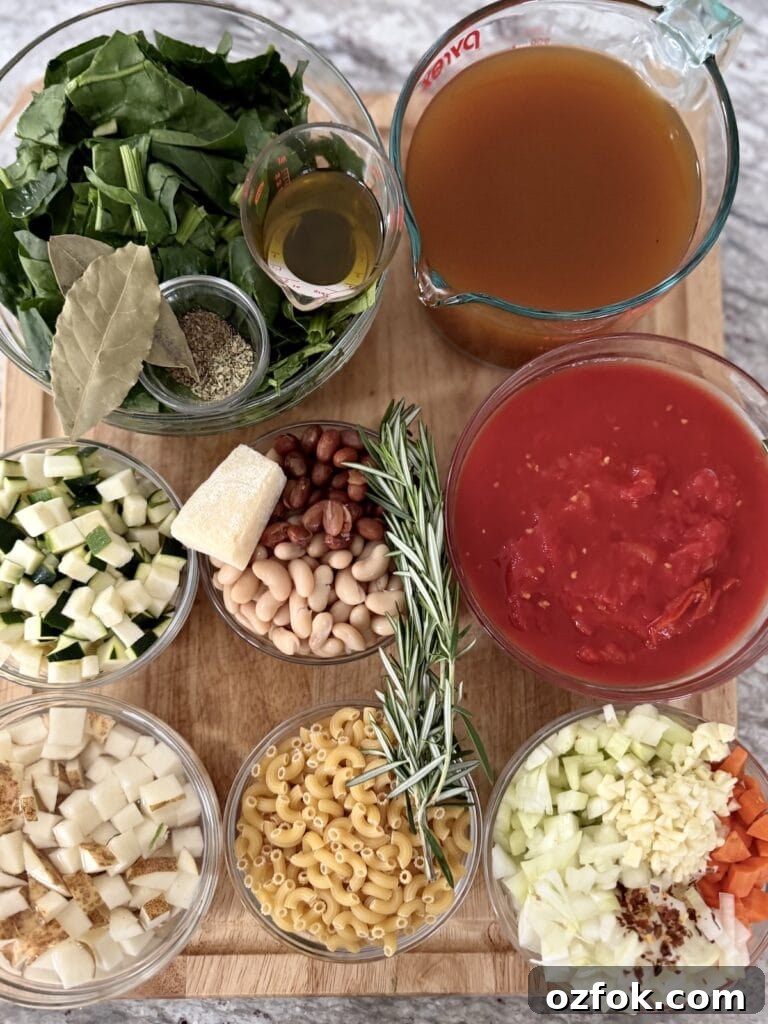
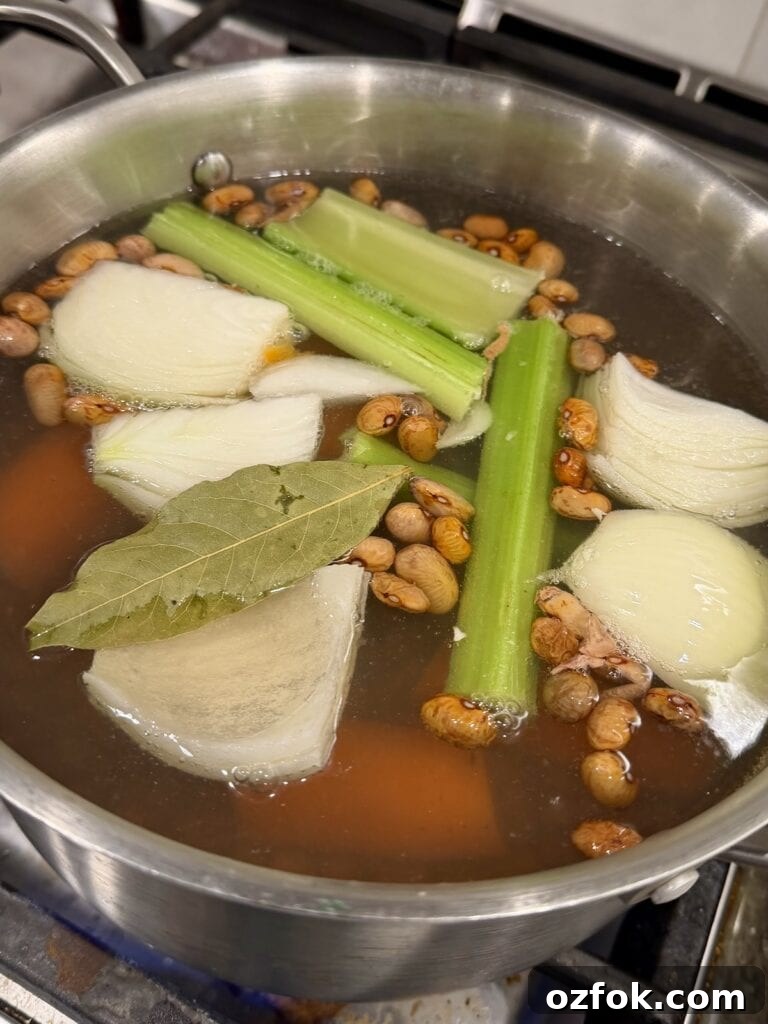
- Prep ingredients: dice onion, celery, carrots, potato and zucchini; chop garlic and spinach. If using dried beans, cook them ahead of time.
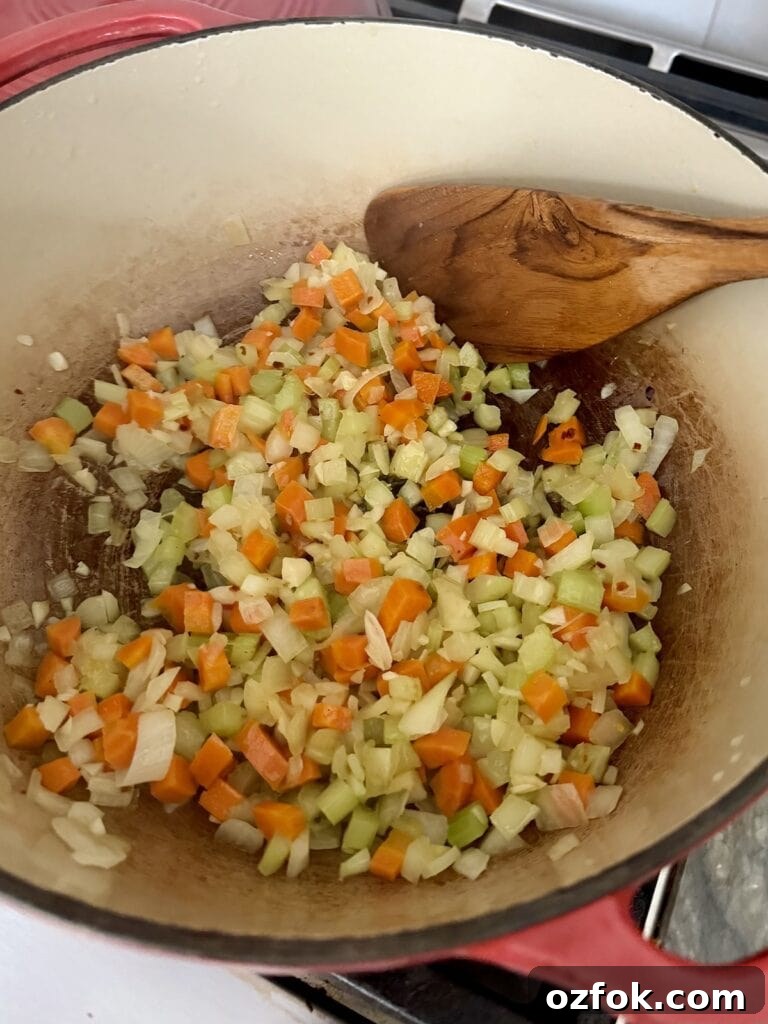
- Warm olive oil over medium-low heat and sauté the onion, celery, carrots, garlic and crushed red pepper until they begin to soften.
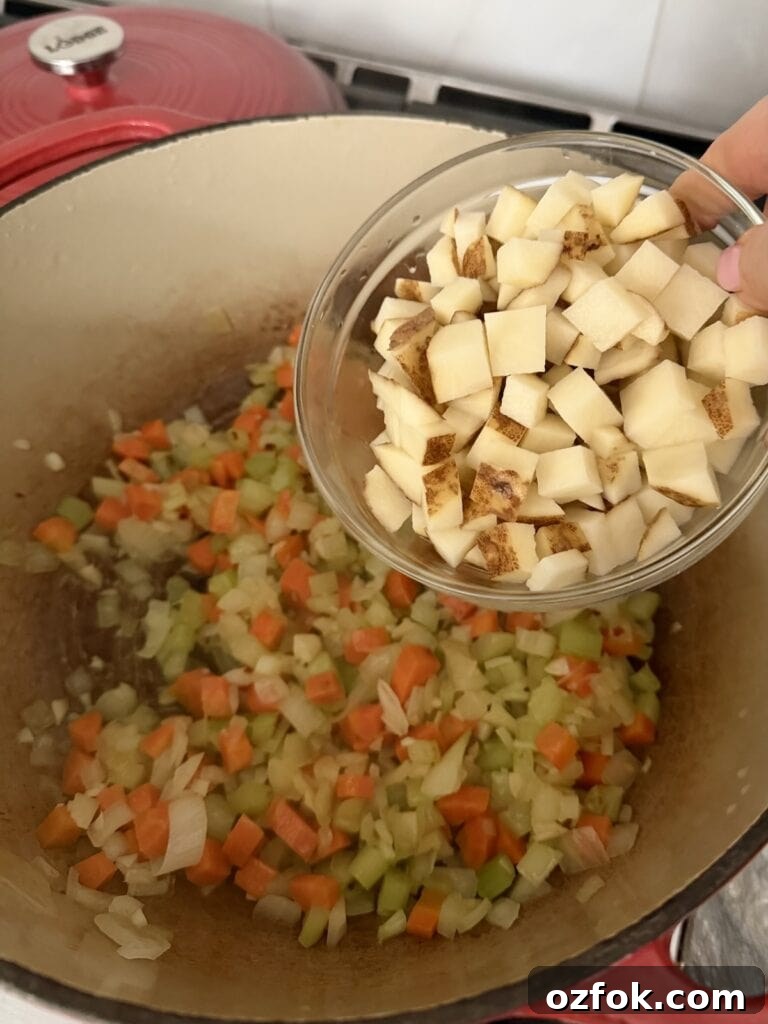
- Add diced potato and cook another 1–2 minutes.
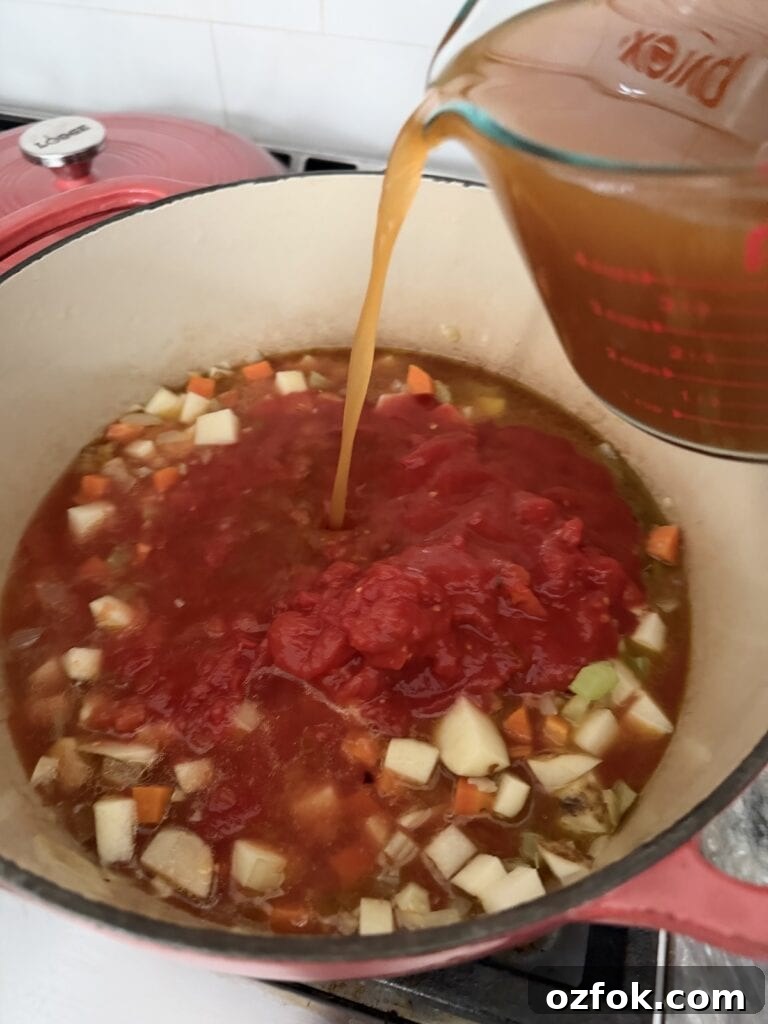
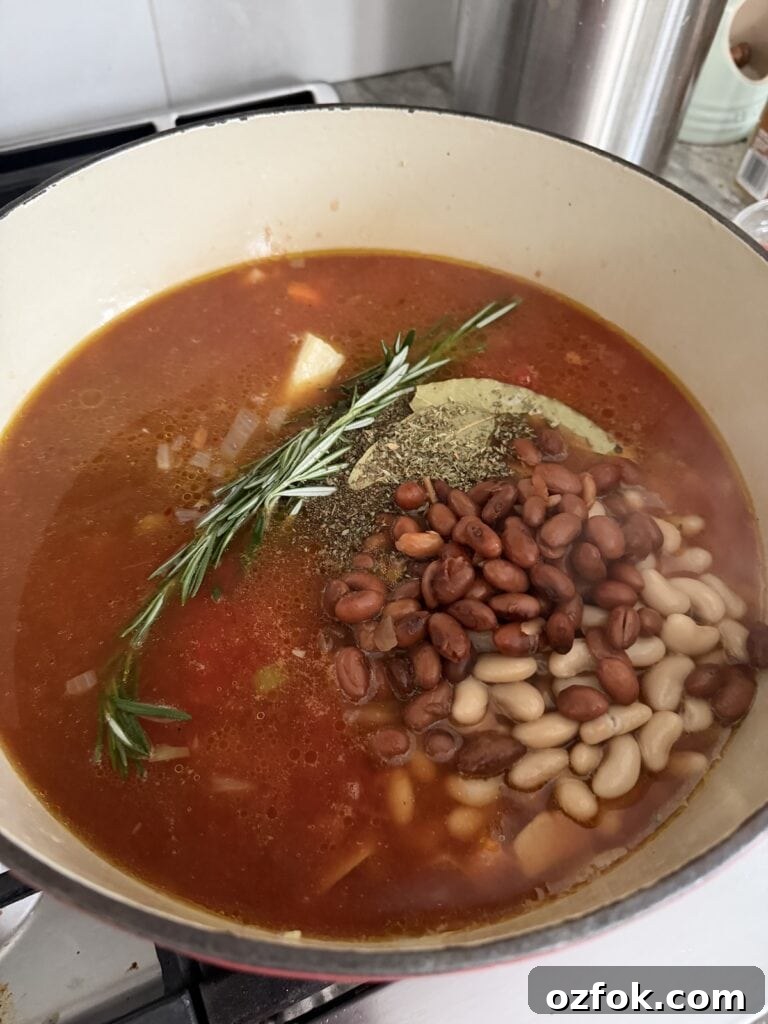
- Stir in crushed tomatoes, water, broth, beans, the cheese rind, fresh and dried herbs, black pepper and bay leaves.
- Bring to a gentle boil, then reduce heat and simmer partially covered about 20 minutes, until the beans, potatoes and carrots are tender. Stir occasionally.
- Remove any rosemary stems and bay leaves.
- Bring to a light boil again and add zucchini, spinach, pasta and a little more olive oil.
- Simmer uncovered until the pasta is about 1–2 minutes shy of al dente, stirring so the pasta doesn’t clump.
- Remove the cheese rind, adjust salt to taste and add more liquid if you prefer a brothy soup.
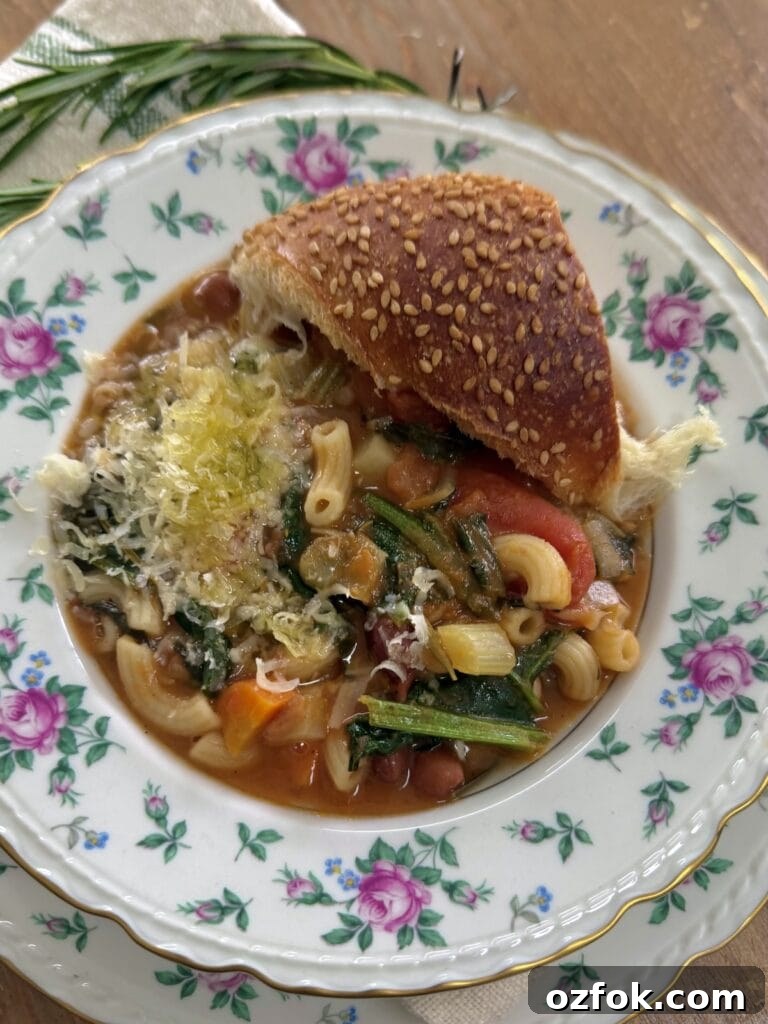
- Serve hot with grated pecorino or parmigiano and a drizzle of extra-virgin olive oil. A small spoonful of pesto is a lovely optional finish.
Pro-Tip
The pasta will keep cooking a bit after you remove the pot from the heat, so stop short of full doneness if you don’t want mushy pasta.
More Italian Soups
If you enjoy hearty soups, try pasta with potatoes, pasta with peas, wedding soup, ribollita, lentil soup with sausage, tortellini soup with turkey or zucchini soup with chickpeas. Each offers a different take on comforting Italian flavors.
Frequently Asked Questions
How is minestrone different from pasta e fagioli?
Minestrone is vegetable-forward and typically includes a wide variety of seasonal vegetables, plus beans and pasta or grains. Pasta e fagioli centers on beans and pasta with fewer vegetables; sometimes some beans are pureed to thicken the soup, producing a denser texture.
How can I prevent mushy pasta in minestrone?
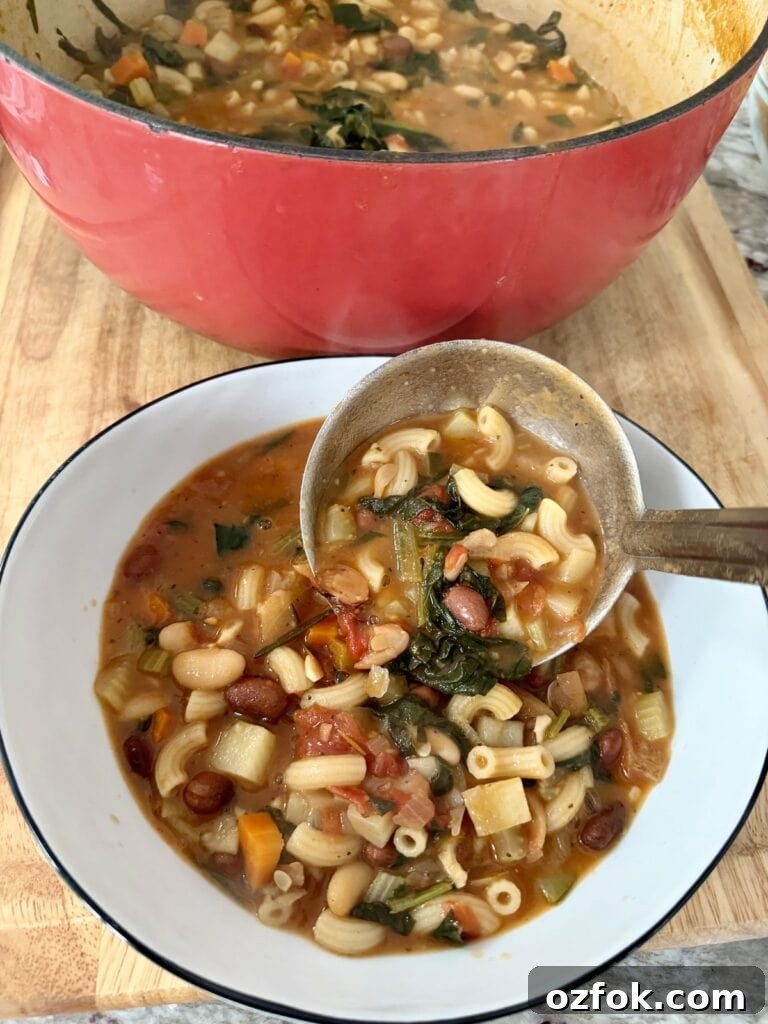
Add pasta near the end of cooking and remove the pot when the pasta is 1–2 minutes shy of al dente. Use small, sturdy shapes like elbows, small shells, tubetti or ditalini. Alternatively, cook pasta separately and add it to bowls when serving—this is best if you plan to freeze the soup.
Recipe Substitutions and Variations
Minestrone is highly customizable. Swap beans, greens, vegetables, grains or add meat—there are no hard rules. Ideas:
- Different beans: chickpeas, navy, red kidney or lentils.
- Different greens: escarole, cabbage, broccoli rabe, swiss chard or kale.
- More vegetables: green beans, peas, corn, mushrooms or yellow squash.
- Add meat: brown Italian sausage, pancetta or leftover ham for extra richness.
- Add poultry: shredded roasted chicken or turkey added near the end.
- Vegan: use vegetable broth and omit the cheese rind.
- Gluten-free: use GF pasta or omit pasta and reduce broth slightly, or substitute cooked grains like farro, quinoa or wheatberries.
Best Beans for Minestrone
Common choices include cannellini (creamy), borlotti (earthy), chickpeas (firm) and lentils (quick-cooking). Mashing a portion of the beans can naturally thicken the broth.
Top Tips for Italian Minestrone Soup
- Beans: canned or cooked-from-dry both work; rinse canned beans well.
- Prep ahead: dice vegetables and cook beans in advance to save time.
- Salt carefully: broth, canned beans and cheese rinds add salt—season at the end to taste.
- Thickness: the soup thickens over time. Add extra broth for a thinner result.
- Storage: refrigerate leftovers up to 3 days or freeze up to 3 months. For best texture, freeze without pasta and add fresh pasta when reheating.
Serving Suggestions
Minestrone can be a main course—serve a generous bowl with a green salad and crusty bread—or a first course before roast chicken or simple mains. Finish individual bowls with grated cheese, a drizzle of quality olive oil and a pinch of chili oil if you like heat.
Italian Minestrone Soup

Ingredients
- 4 Tbsp olive oil, divided
- 1½ cups small diced yellow onion
- 1 cup small-diced celery
- 1 cup small-diced carrots
- 2 Tbsp chopped or thinly sliced garlic
- ¼ tsp crushed red pepper (optional)
- 1 all-purpose, Russet or Yukon Gold potato, small diced (about 2 cups)
- 1 (28-ounce) can whole tomatoes, crushed by hand (or crushed/diced)
- 1½ tomato cans water
- 4 cups low- or no-sodium vegetable or chicken broth
- 2 (15-ounce) cans cooked beans, drained and rinsed (about 3 cups total) or cooked dried beans
- 1–2 pieces parmigiano or pecorino cheese rind
- 1–2 sprigs fresh rosemary
- ½ tsp dried oregano
- ½ tsp dried basil
- ½ tsp ground black pepper
- 2–3 bay leaves
- 2 cups diced zucchini
- 12–16 ounces spinach, chopped
- About 1 cup small pasta (5–6 ounces)
- Salt, to taste
- Grated pecorino or parmigiano, for serving
- High-quality extra-virgin olive oil, for serving
- Optional: basil pesto, for serving
Instructions
- Prep all vegetables and beans as noted. If using dried beans, cook them ahead of time.
- Heat 3 Tbsp olive oil in a large pot or Dutch oven over medium-low heat. Add onion, celery, carrots, garlic and crushed red pepper and cook about 5 minutes until softened. Cover to speed the process if desired.
- Drain the potato if it’s been held in water and add it to the pot; cook 1–2 minutes.
- Add tomatoes, water, broth, beans, cheese rind, rosemary, oregano, dried basil, black pepper and bay leaves. Stir to combine.
- Cover, bring to a boil, then reduce to a simmer and cook partially covered about 20 minutes, until potatoes, carrots and beans are tender. Stir occasionally and ensure the cheese rind doesn’t stick.
- Remove and discard bay leaves and rosemary stems.
- Increase heat to a light boil, then add zucchini, spinach, pasta and remaining 1 Tbsp olive oil.
- Cook uncovered until the pasta is 1–2 minutes less than al dente, stirring to prevent sticking. Remember the pasta will continue to soften off heat.
- Add extra liquid if you prefer a brothy soup. Remove the cheese rind, taste and adjust salt, then turn off the heat.
- Ladle into bowls and finish with grated pecorino or parmigiano and a drizzle of extra-virgin olive oil. Add pesto if desired. Buon appetito!
Notes
- This recipe yields about 12–13 cups. Estimate roughly 1–1½ cups per serving and halve the recipe if you want less.
- Beans: use canned or cooked-from-dry beans. Rinse canned beans well. If cooking dried beans, soak or use the quick-soak method before simmering until tender. Cooking beans with aromatics adds flavor.
- Spinach: regular, baby or frozen spinach works; if frozen, thaw and squeeze out excess liquid.
- Pasta: any small shape will work—elbows are classic. If freezing soup, omit pasta and add fresh pasta when reheating.
- Storage: refrigerate up to 3 days or freeze up to 3 months (preferably without pasta). Reheat slowly over medium-low heat, adding broth or water as needed.