This article is intended for bakers who already have some experience with sourdough. If you are completely new to sourdough baking, I recommend starting with Tartine Bread, which was my gateway into sourdough and is the basis for the method below. I built my starter following King Arthur Flour’s instructions, another excellent resource for beginners. If you already maintain a starter, you’ve likely faced two common issues: what to do with the excess discard after each feeding, and how to fit sourdough baking into a workweek. These two challenges led me to experiment. I found that by sharply reducing the inoculation percentage (the amount of starter added to the dough) and greatly extending the bulk fermentation, I could bake excellent loaves using only discard starter. Because fermentation proceeds more slowly with this approach, the dough can rise while you’re at work, making weeknight or workday baking practical.
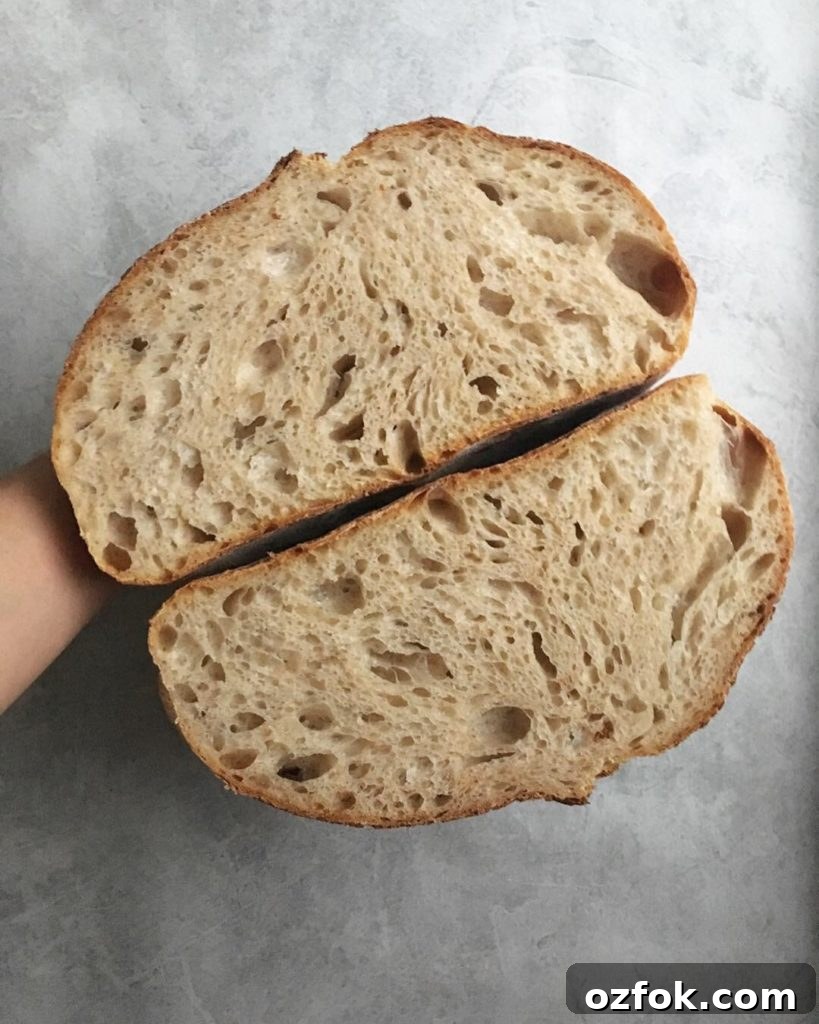
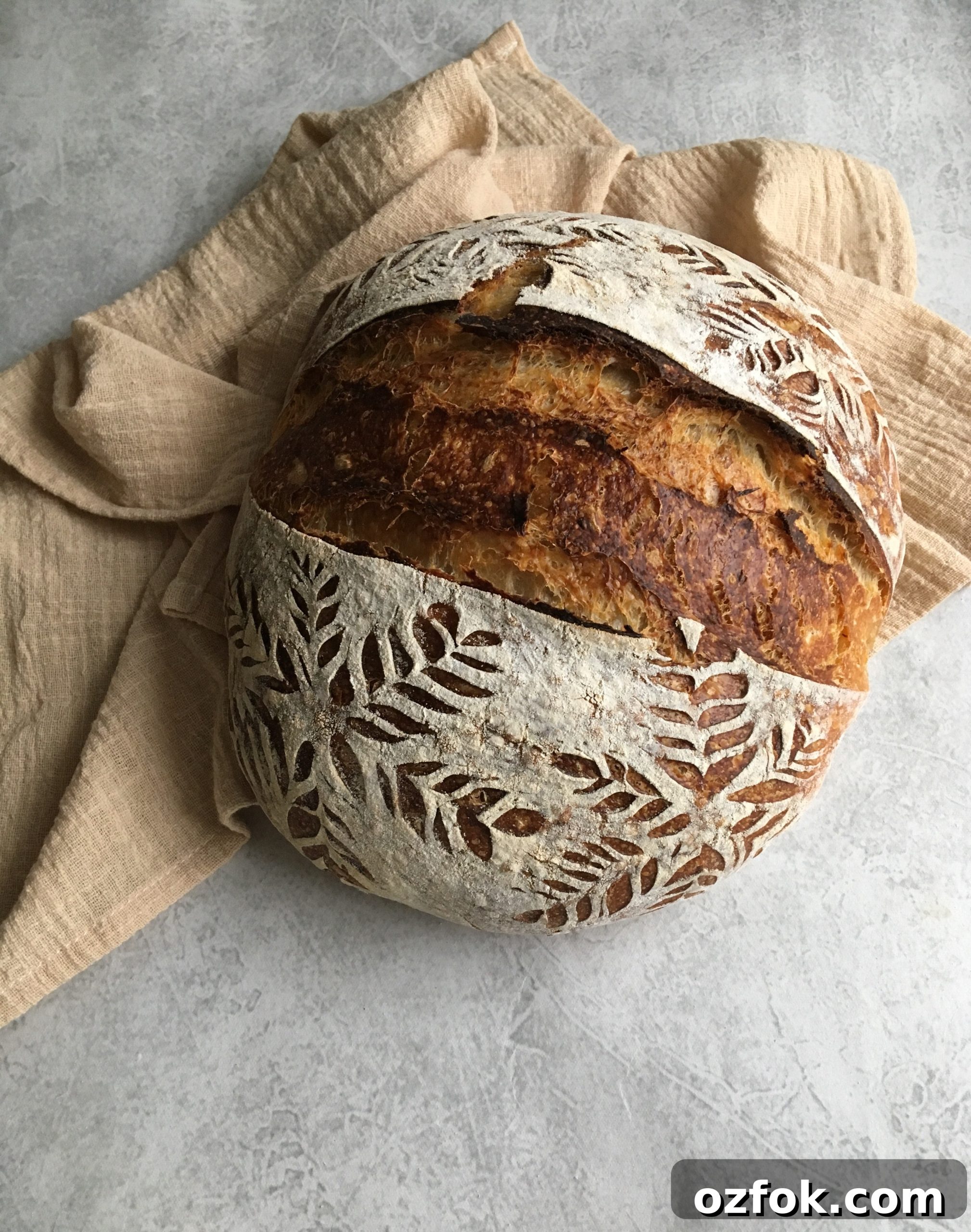
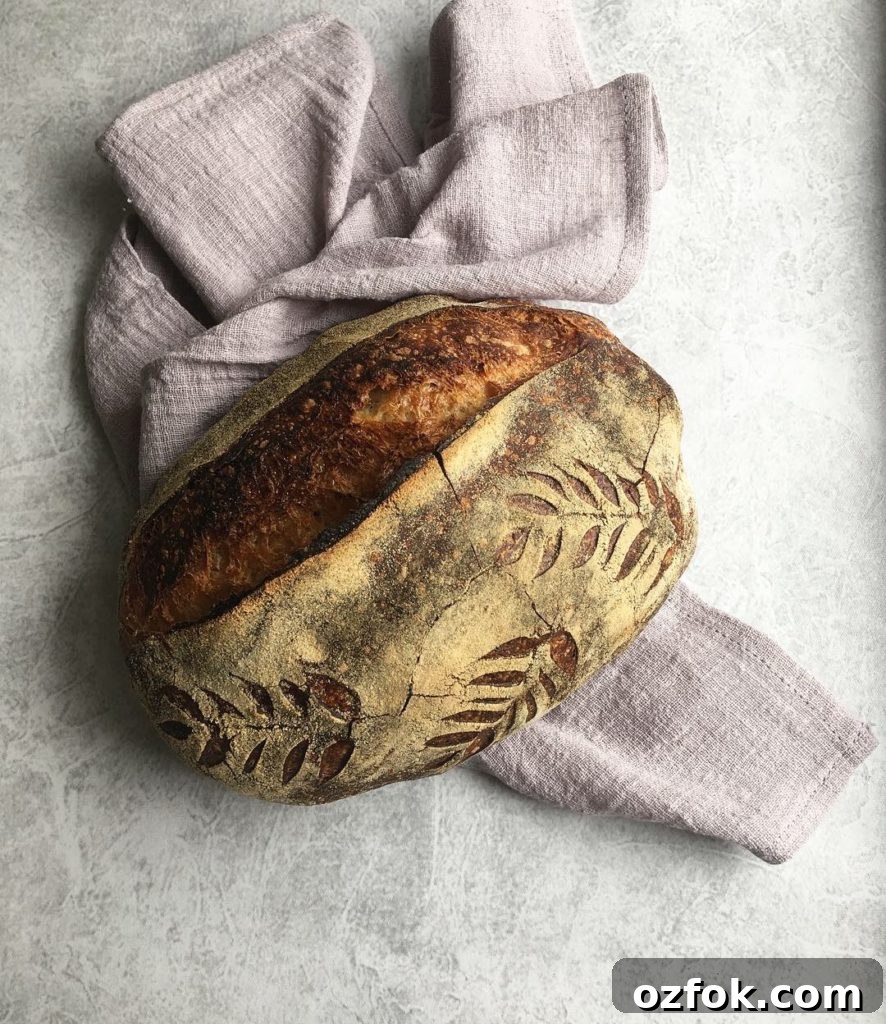
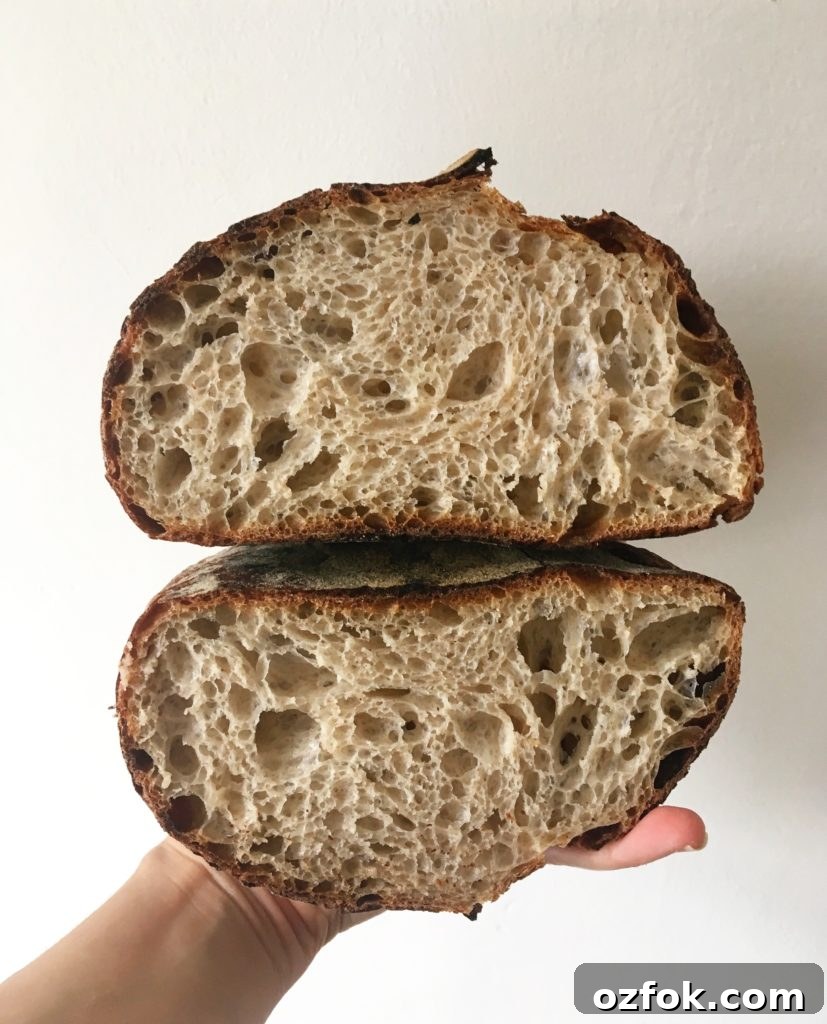
My results have been consistently encouraging. Below are some photos of loaves I made using discard starter:
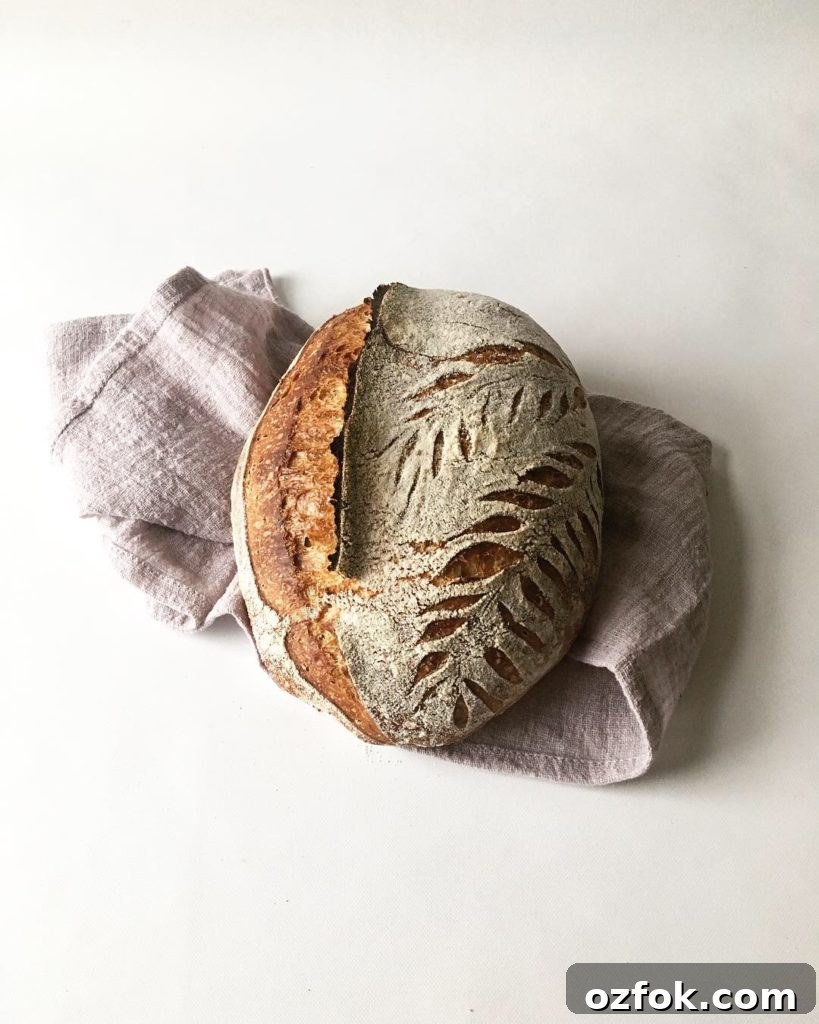
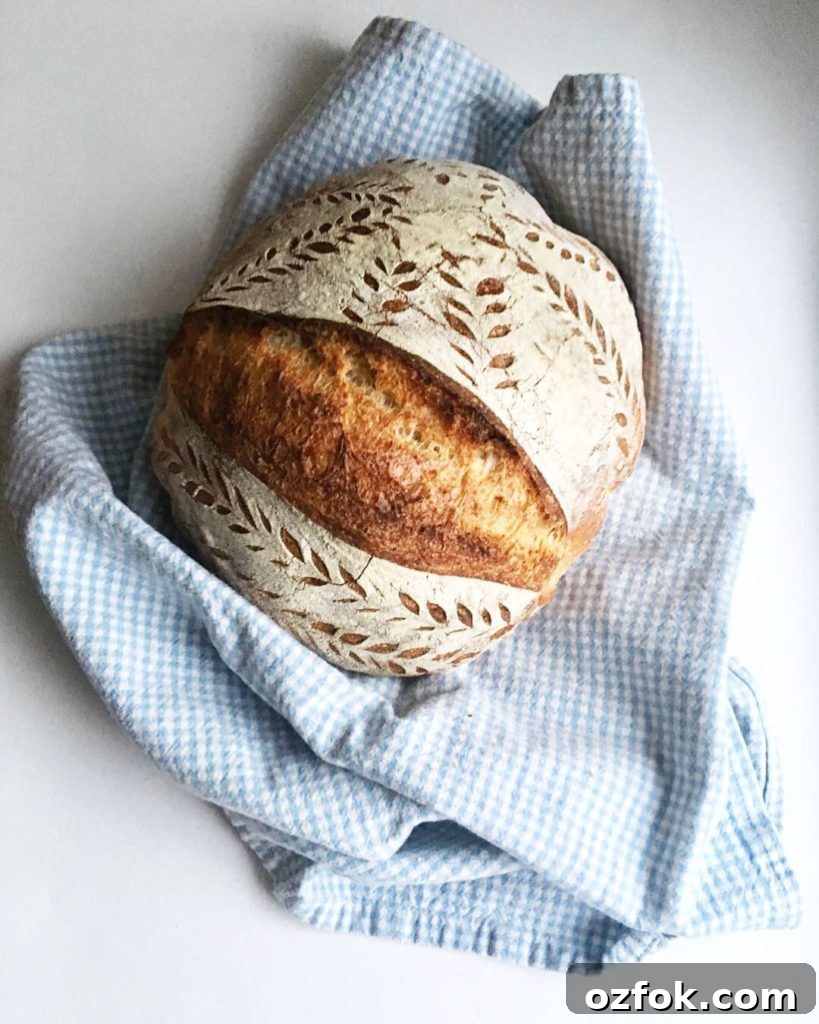
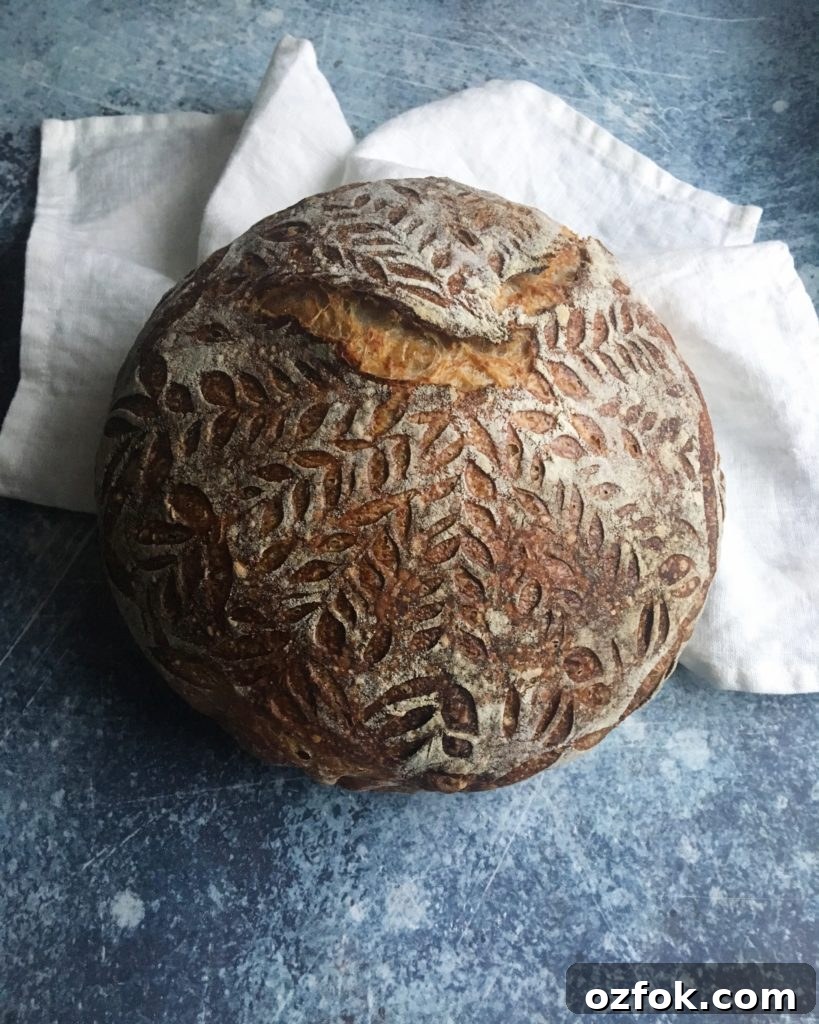
In short, this method modifies the Tartine basic country loaf in three key ways: (1) substitute levain with a much smaller percentage of discard starter, (2) use cold water straight from the refrigerator when mixing the dough, and (3) after 2–3 stretch-and-folds, let the dough complete bulk fermentation undisturbed for 10 hours or more. These tweaks slow fermentation, reduce sourness, and let the dough rise while you’re away from home.
Reducing the Inoculation Percentage
There are two practical reasons to cut back the inoculation percentage when using discard. First, discard tends to be quite acidic, and using the same amount you would for a levain can make the bread overly sour. I typically keep discard at or below 10% of the dough weight. Second, less starter slows fermentation. While many bakers try to speed up rises, a slower bulk fermentation is useful here because it allows the dough to develop over the course of a workday without collapsing or overproofing.
Using Cold Water to Mix the Dough
Using refrigerator-cold water is another straightforward way to slow bulk fermentation. I use bottled spring water chilled in the fridge because my tap water is heavily chlorinated; your tap may be fine where you live. The colder dough temperature delays yeast and bacterial activity, aligning the timing of the rise with a typical workday.
Extending the Bulk Fermentation
With reduced inoculation and cold water, the dough needs much more time to rise. My goal is usually a 10–12 hour bulk fermentation after transferring the dough to a clear, insulated container. That extended window lets me mix and perform the stretch-and-folds in the morning, then shape and bake in the evening or the following morning. Expect variation: room temperature, starter freshness, and dough quantity all affect timing.
Final Thoughts
This approach is not yet a rigid formula; I still adjust based on conditions. Sometimes the dough rises more or less than anticipated. Warmer rooms, recently fed discard, or smaller dough batches speed fermentation, while cool kitchens and larger batches slow it. Larger quantities take longer to warm to room temperature, which typically delays bulk rise.
I’ve learned there is considerable flexibility in acceptable rise. While Tartine recommends a roughly 30% volume increase for a conventional levain, I’ve had good results with discard loaves that rose 60–90% during the extended bulk fermentation. Because discard is less vigorous than refreshed levain, a larger visual increase during a long, slow rise doesn’t necessarily harm the final loaf.
These notes are intended as a practical guide and an invitation to experiment. If you try this method, adapt hydration, flour mix, and inoculation to your environment and taste. If you have tips or observations about baking with discard starter or stretching the bulk rise, please share them—sourdough baking is always a process of learning and discovery.

Country Loaf with Discard Sourdough Starter
A classic country loaf made using discard sourdough starter. Adapted from Tartine Bread.
Ingredients
- 450 g all-purpose and/or bread flour (preferably King Arthur)
- 50 g whole wheat flour or another whole grain flour
- 50 g discard sourdough starter (or less, see notes)
- 375 g cold spring water, divided (or more, see notes)
- 10 g table salt or fine sea salt
Instructions
- Pour 350 g of cold spring water into a large, wide mixing bowl. Add the discard starter and stir to disperse it.
- Mix in the all-purpose (or bread) flour and whole wheat flour by hand or with a bowl scraper until no dry flour remains.
- Let the mixture rest for 25–30 minutes (autolyse).
- Add the salt and the remaining 25 g of cold spring water, working it into the dough with your hands.
- Transfer the dough to a large, clear, well-insulated container and cover it. Rest for 30 minutes.
- Perform three sets of stretch-and-folds, spaced 30 minutes apart.
- Leave the covered dough at a warm room temperature (around 75°F / 24°C) for 10–12 hours, aiming for a 60%–90% increase in volume. If the dough hasn’t risen sufficiently when you return, you can place the container in a turned-off oven with the pilot light on to gently speed fermentation.
- Turn the dough onto a work surface, pre-shape, and rest for 15–30 minutes.
- Shape the loaf and place it in a cloth-lined banneton dusted with a rice and all-purpose flour mix.
- Cover the banneton (a plastic shower cap works well) and refrigerate overnight.
- To bake in a preheated Dutch oven: preheat the pot in a 500°F oven. Transfer the loaf to parchment, score, place in the hot pot, cover, and bake covered at 500°F for 20 minutes. Remove the lid, reduce to 450°F, and bake 25–35 minutes more until the crust is deeply colored to your liking.
- To bake with a cold start: place the scored loaf on parchment into an unheated Dutch oven, cover, and put the pot into a cold oven. Heat to 500°F and bake covered for 20 minutes, then remove the lid, reduce to 450°F, and bake 25–35 minutes uncovered.
- Cool the loaf completely on a wire rack before slicing.
Recipe Notes
- This recipe yields one large loaf (about 1.75 lb). Halve the ingredients for a smaller loaf or double them for two loaves. Larger batches may take longer to complete bulk fermentation because they take longer to warm to room temperature.
- If your kitchen is cooler than about 74–75°F, you may need more time, warmer water, or a gently warmed environment (for example, a turned-off oven with the pilot light on) to finish the bulk rise in 10–12 hours.
- Do not increase the amount of discard starter beyond about 10% of dough weight; more discard tends to produce an overly sour loaf.
- In warm kitchens or with small dough quantities, you can reduce inoculation further; I have used as little as 5% successfully.
- Tartine specifies all-purpose flour, but bread flour or a mix of both work well. I prefer King Arthur flour.
- Including some whole grain flour improves flavor, but it does not have to be whole wheat—rye, spelt, or blends also work nicely.
- The recipe lists 375 g total water (75% hydration). Feel free to experiment; I’ve gone up to 80% hydration with success.
- You can use either a preheated Dutch oven or a cold start. Both produce excellent results; any difference in oven spring is minimal.