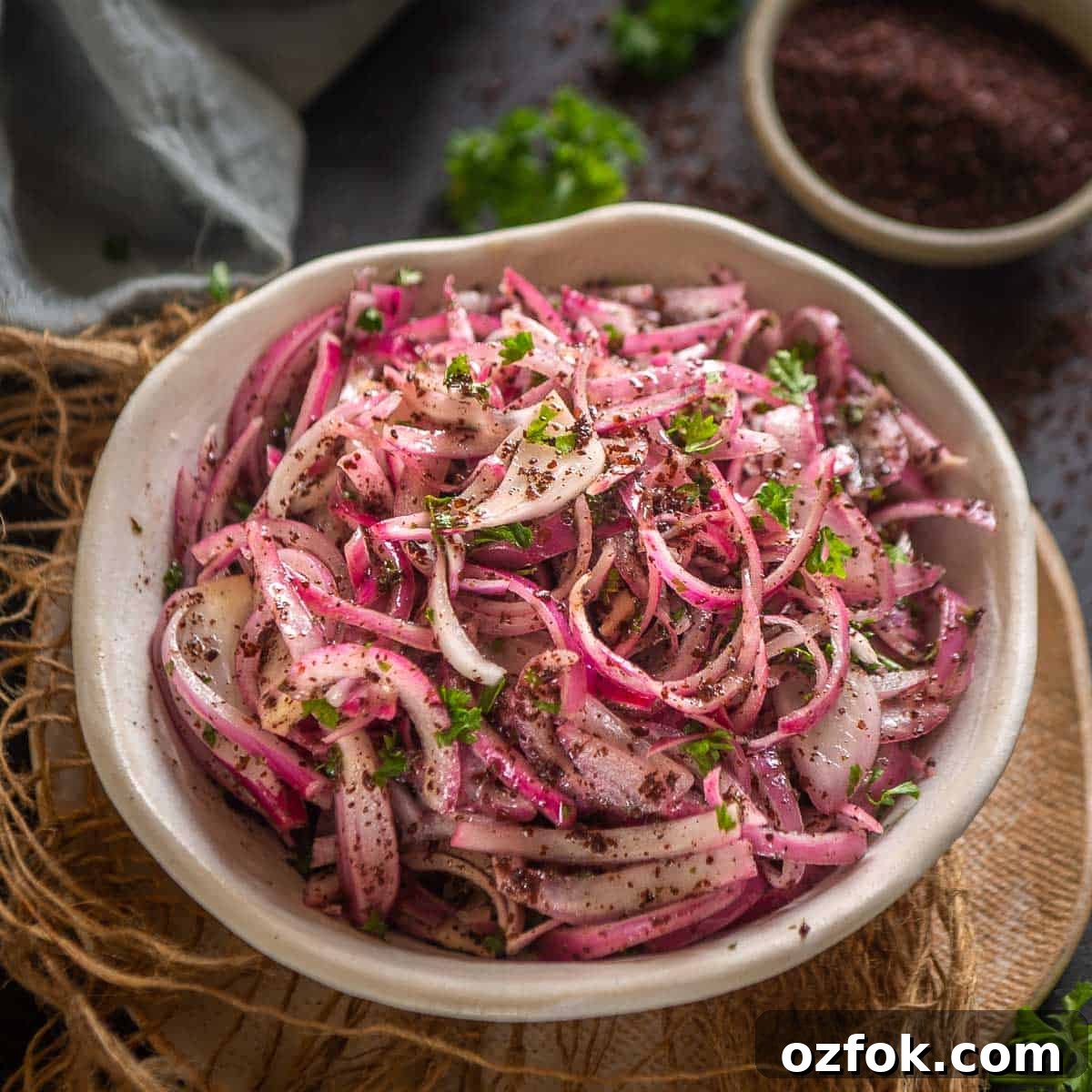
These 5-minute Sumac Onions are a simple Turkish-style onion salad or quick pickle that brings bright, lemony tang and a satisfying crunch to many dishes. Serve this red onion salad with grilled meats, kebabs, sandwiches, burgers, or soups to add freshness and contrast. It’s vegan, gluten-free, and ready in minutes using pantry-friendly ingredients.
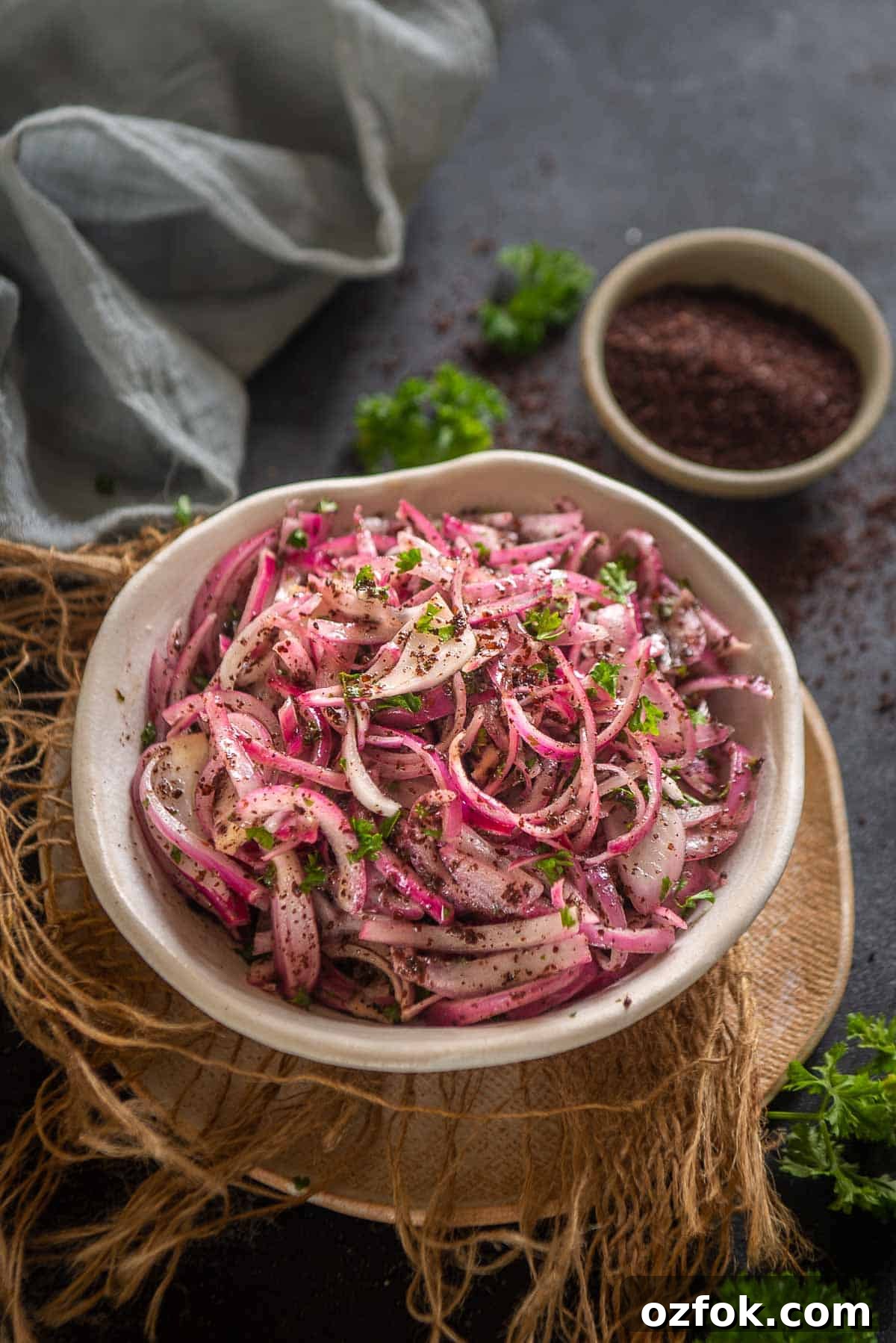
About Sumac Onions
Sumac Onions (Turkish Onion Salad) are a quick Middle Eastern pickle or raw salad made from thinly sliced red onions tossed with sumac, lemon juice, olive oil, vinegar, and fresh herbs. The result is a crunchy, tangy condiment that enhances grilled and roasted dishes, sandwiches, and casual meals. Because the dressing is acidic and oily, it softens the sharpness of raw onion while preserving texture.
This salad takes only a few minutes to assemble and benefits from a short chill so the flavors can meld. The tang from sumac and vinegar complements rich meats and fried foods, while parsley adds a fresh, herbaceous note. Traditionally served alongside meat and chicken dishes in Turkish and Middle Eastern cuisine, it also works as a bright topping for flatbreads and kebabs.
What Is Sumac
Sumac is a deep red spice commonly used in Middle Eastern and Mediterranean cooking. It has a gentle, tart, lemony flavor—less sharp than fresh lemon but pleasantly sour—making it ideal for dressings, marinades, and rubs. Beyond flavor, sumac is valued in traditional foodways for its antioxidant and anti-inflammatory qualities.
Sumac is widely available in grocery stores and spice shops, and it is typically sold ground. If you don’t have it on hand, the salad will still work with extra lemon juice, though the distinctive aroma and color of sumac are unique.
Ingredients
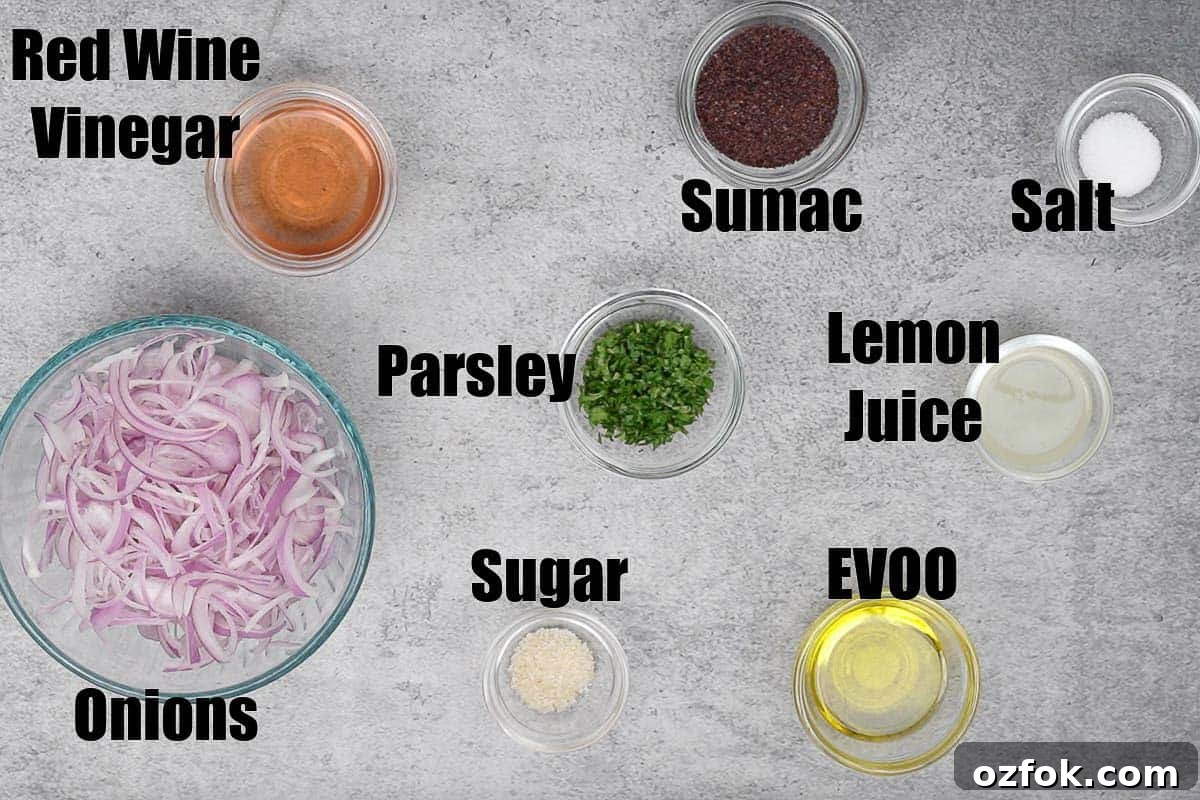
- Onions – Traditionally made with red onions for color and mild sweetness, though white or yellow onions can be used.
- Sumac – The key ingredient that gives the salad its lemony tang and red hue.
- Parsley – Fresh parsley brightens the salad and adds color. Mint or cilantro are optional alternatives.
- Lemon juice – Freshly squeezed for the best flavor.
- Extra virgin olive oil and red wine vinegar – These soften the onions and round out the tangy dressing.
- Salt and sugar – A pinch of sugar balances the acidity; salt seasons the salad.
- Optional: a pinch of cayenne or red pepper flakes for heat, or a splash of pomegranate molasses for a sweeter, more complex note.
How To Make Sumac Onions
Begin by preparing the onions. Peel and wash three large onions (or enough to yield about 2 cups thinly sliced). Cut each onion in half and slice into thin, even half-moons. If the onions taste especially sharp, soak the slices in cold water for 15 minutes, then drain and gently squeeze out excess water before proceeding.
Wash and finely chop a small bunch of parsley (about 2 tablespoons when chopped).
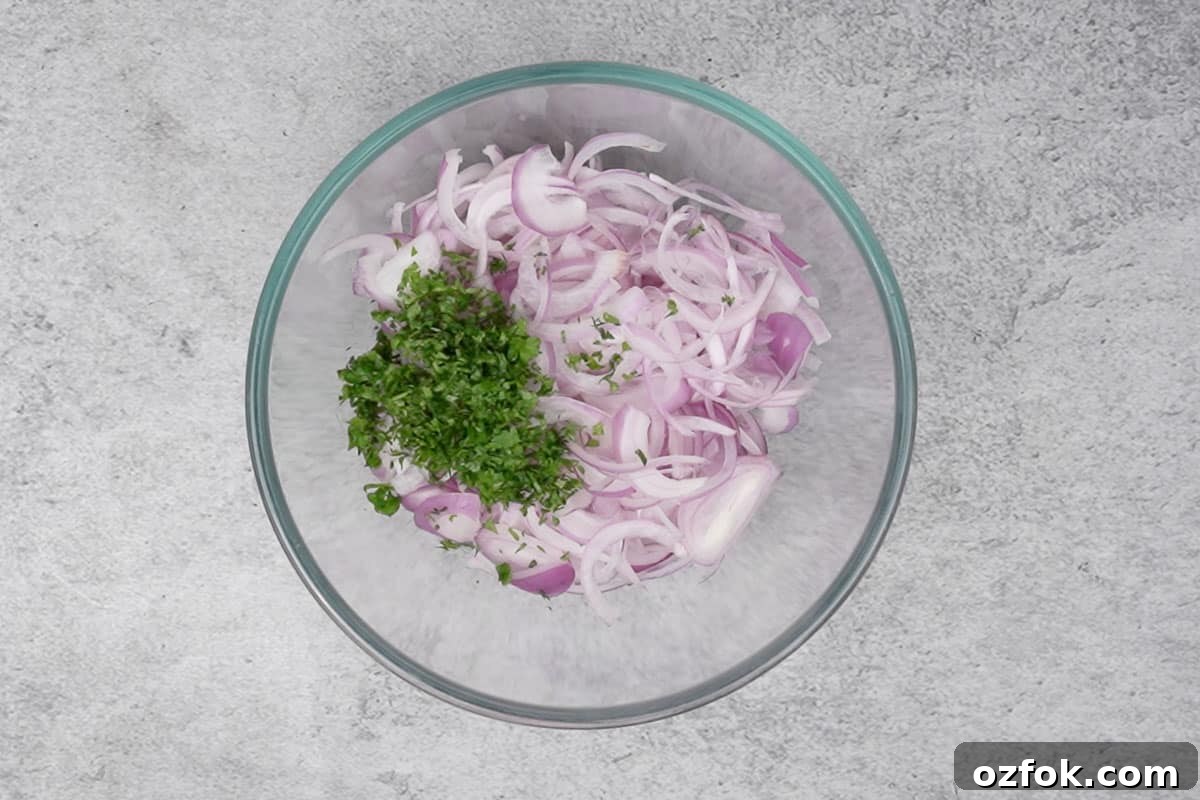
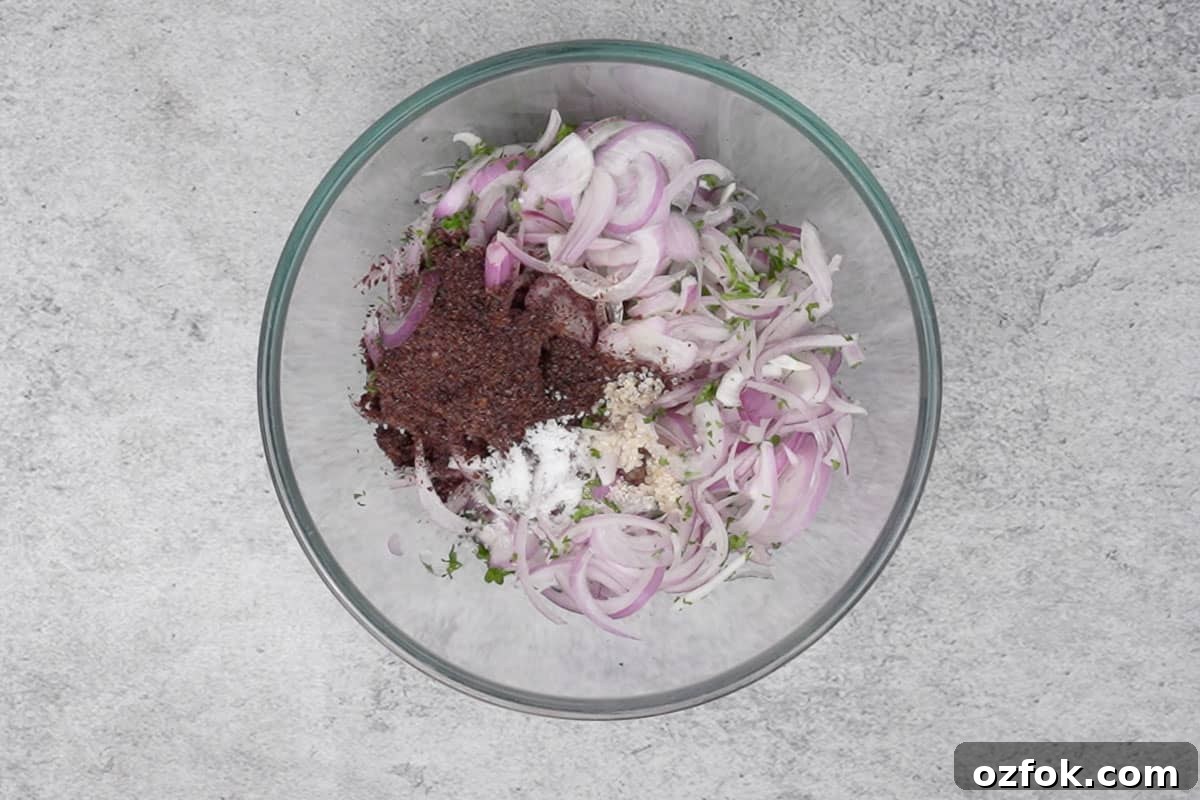
In a mixing bowl combine:
- 2 cups thinly sliced red onions
- 2 tablespoons chopped parsley
- 2 tablespoons extra virgin olive oil
- 2 tablespoons freshly squeezed lemon juice
- 2 tablespoons red wine vinegar
- 2 tablespoons sumac
- ½ teaspoon salt
- ½ teaspoon sugar
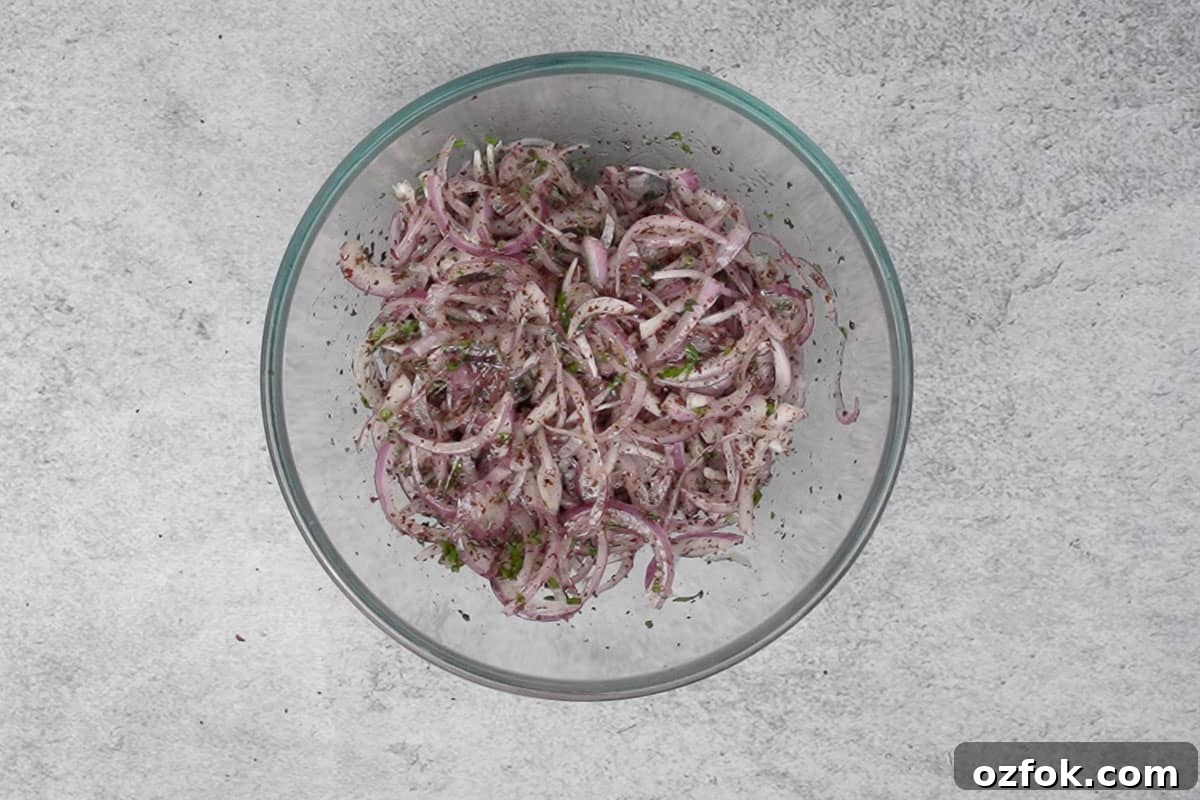
Use your hands to massage the onion slices and dressing together for about 30 seconds. This helps the onions absorb the flavors and softens their bite. Transfer to the refrigerator and chill for at least one hour to let the flavors meld—though it can be served immediately if needed. Chilling improves the balance between acidity, oil, and spice.
Pro Tips
- Use a sharp knife when slicing onions to reduce eye irritation. Chilling or briefly soaking peeled halves in water before slicing can also help.
- Store ground sumac in an airtight container away from heat and light; it will gradually lose potency over time, so use within several months for best flavor.
- If you prefer a sweeter, more complex dressing, stir in a teaspoon of pomegranate molasses or a touch more sugar.
- To make the salad spicier, add a pinch of cayenne or crushed red pepper flakes to taste.
Frequently Asked Questions
Sumac has a distinctive sour, fruity note that is difficult to replicate exactly. Extra lemon juice can increase acidity, but it will not provide the same flavor profile or color as sumac. If possible, use sumac for the authentic taste.
Can I use white or yellow onions?
Yes. Red onions are traditional and offer color and a milder sweetness, but white or yellow onions will work. If using pungent yellow onions, soak the slices in cold water for 15 minutes to mellow their bite before draining and dressing.
Nutrition (approx.)
Per serving, this salad is low in calories and offers modest amounts of healthy fat from olive oil. Typical values per serving (approximate): Calories 66 kcal, Carbohydrates 6 g, Protein 1 g, Fat 5 g, Fiber 1 g, Sodium varies by added salt. Use these numbers as general guidance rather than exact values.
This easy, versatile Sumac Onions salad brightens a wide range of dishes. Make a batch to keep in the fridge for the week—its sharp, tangy flavor pairs particularly well with grilled meats, roasted vegetables, and flatbreads, and it adds a fresh, crunchy contrast to hearty meals.