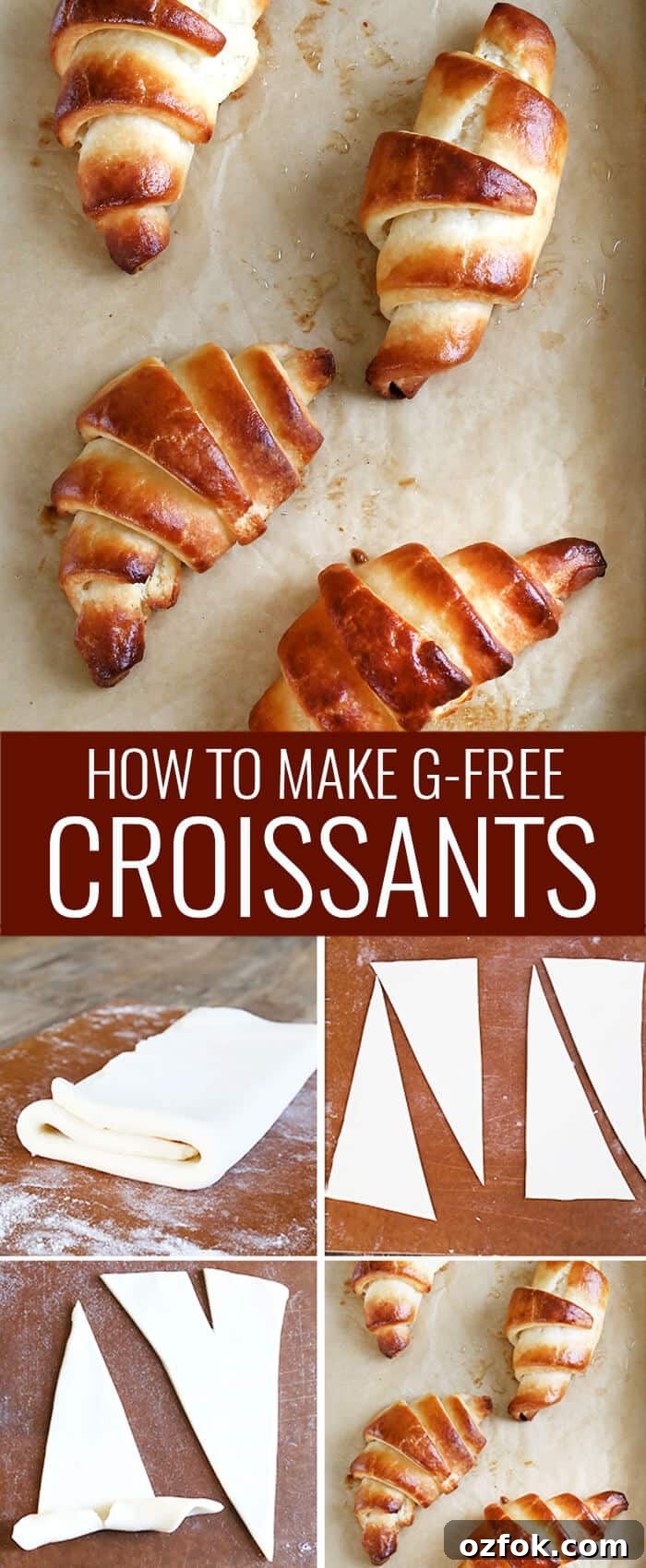
If you’ve ever wondered whether you can make truly flaky, buttery gluten‑free croissants at home, this recipe proves you can—and it’s worth the effort. Follow the step‑by‑step instructions below to get great results.

Why this recipe works
These croissants achieve that melt‑in‑your‑mouth flakiness that looks intimidating but is straightforward once you understand the process. The recipe includes detailed steps and photos so you can picture each stage. The technique is really more about careful handling and timing than complicated chemistry—though it does require patience and chilling periods.
Over the years many readers have asked for a gluten‑free croissant recipe. Croissant dough is essentially a yeasted, laminated dough—like puff pastry but with yeast—so this recipe adapts that method to gluten‑free pastry flour and yields the flaky layers we expect from a classic croissant.

The secret to a perfect gluten‑free croissant
Croissants are made from laminated, yeasted dough. Lamination means folding a butter packet into dough repeatedly to create alternating layers of butter and pastry. The butter expands in the oven, producing steam that lifts and separates the pastry layers for flaky texture. The yeast adds an extra lift and lightness compared with plain puff pastry.
Read the full instructions, study the photos, and follow temperature guidance carefully—some steps call for cold ingredients and chilling, others for ingredients at room temperature. When you treat the dough like a small architectural project of alternating layers and chilled butter, the results will follow.
Recipe ingredients
- Gluten‑free pastry flour – Use a pastry flour made from an all‑purpose gluten‑free blend combined with cornstarch and dry milk (recipe notes explain proportions).
- Instant yeast – Provides the rise that separates the layers. If you only have active dry yeast, use 25% more by weight and proof it in some milk first.
- Sugar – A small amount to feed the yeast.
- Salt – Balances the butter flavor and moderates the yeast.
- Butter – The primary flavor and the lamination agent; use a high‑fat, European‑style butter if possible.
- Milk – Brings the dough together.
- Egg – Used as an egg wash to give a rich golden crust (can be substituted for dietary needs—see notes).
Equipment needed
- Large mixing bowl
- Rolling pin
- Parchment paper
- Plastic wrap
- Pastry cutter or pizza wheel
- Baking sheets
- Basting brush

Expert tips
Don’t rush the process
Making croissants takes time. Do not skip refrigeration steps or reduce the number of turns—both are essential. If you’re making croissants for the first time, plan a weekend and allow plenty of time for practice and patience.
Splurge on the butter packet
The butter packet is the star. Choose a European‑style or high‑fat butter for richer flavor and better lamination.
Envision shaping the croissants
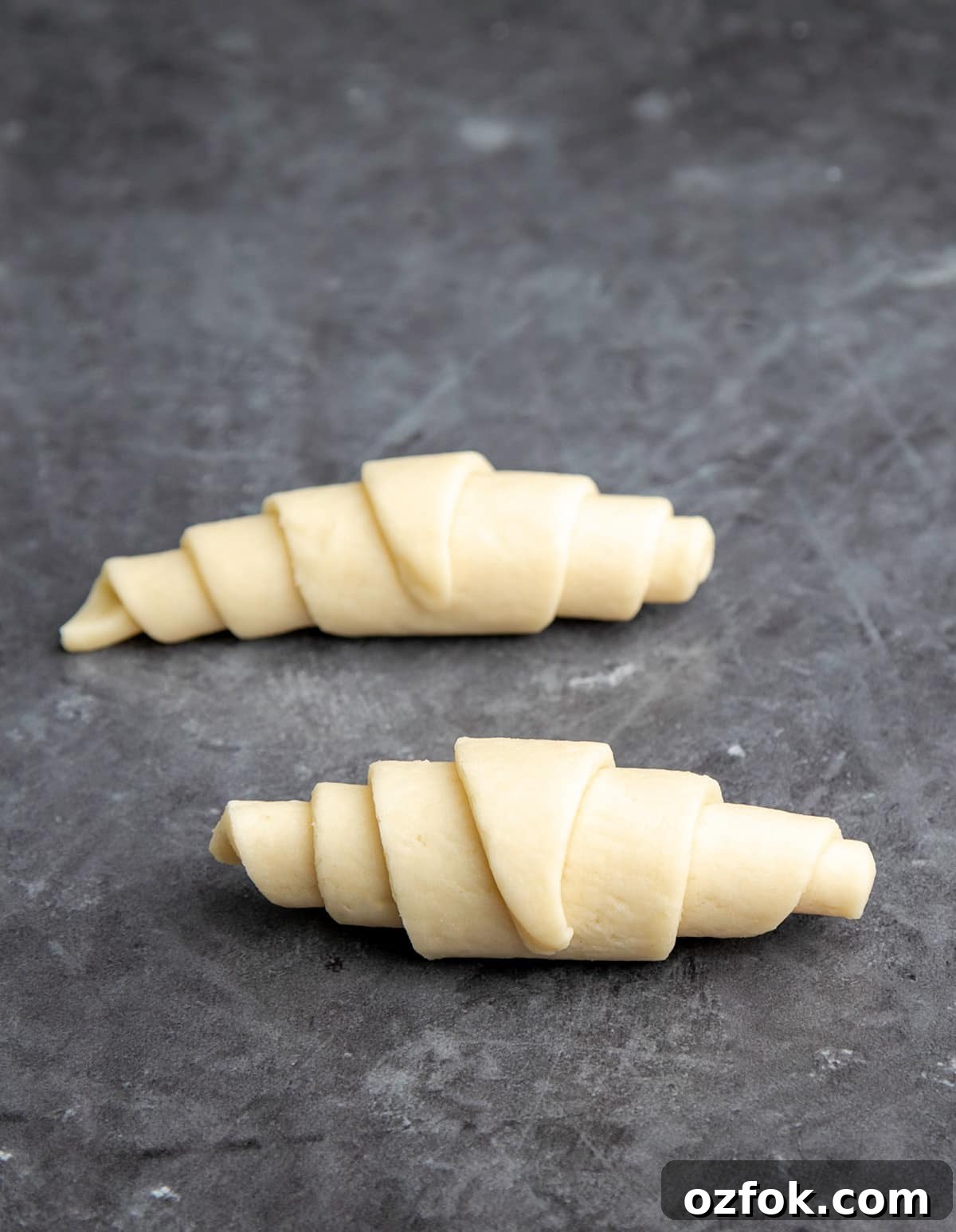
After rolling the dough to its final thickness, cut equal rectangles, then slice diagonally into triangles with a sharp wheel or knife for clean edges. Cut a small slit at the base of each triangle and roll from base to tip, turning the edges outward slightly to preserve the coil definition.
Chill the dough whenever necessary
Cold, firm butter is essential. If the dough or butter begins to soften or the dough becomes sticky, refrigerate it until firm before continuing. It’s better to pause and chill than to keep working with warm butter.
Storage suggestions
Baked gluten‑free croissants keep at room temperature in an airtight container for two to three days. Over time they will firm up and stale; briefly microwaving for 10–15 seconds can restore softness.
Freeze for longer storage
Cool the croissants completely, freeze them individually on a baking sheet, then transfer to a freezer‑safe bag. They keep for a couple of months. Thaw at room temperature or in the refrigerator, then warm in a 350°F oven for a few minutes to refresh.
Ingredient substitutions
Dairy free
If you need dairy‑free options: replace dry milk with coconut milk powder (preferred over soy for texture), use a plant milk in place of liquid milk, and substitute a high‑quality vegan butter for the laminated butter. Vegan butter brands vary in performance—choose one with a higher fat content and good flavor.
Egg free
The egg is only for the wash. To achieve a glossy brown finish without eggs, brush with melted butter or melted vegan butter before baking.
Vegan
For gluten‑free and vegan croissants, combine the dairy‑free and egg‑free substitutions above.
Recipe variations
A simple and delicious variation is gluten‑free pain au chocolat: place a few pieces of chocolate on each rectangle before rolling into triangles and shaping. Bake the same way for flaky chocolate‑filled croissants.
FAQs
The main difference is yeast: croissant dough is yeasted, which adds extra lift, while puff pastry is not. Both use lamination—folding butter into dough—to create flaky layers, but the yeast makes croissants puffier and slightly more tender.
No. Crescent rolls are an enriched yeast bread shaped into crescents, typically made with warmer ingredients and without lamination. Croissants use laminated dough with alternating layers of cold butter and pastry for the flaky texture.
Lamination is the process of enclosing a butter packet in dough and folding and rolling the dough repeatedly to create many thin alternating layers of butter and pastry. It’s the essential technique for flaky croissants.
Yes, the recipe can be doubled, but it’s easier for beginners to work with a single batch. Doubling increases handling and the need for extra workspace and refrigeration capacity.

Equipment
- Rolling Pin
- Pizza wheel or pastry wheel
Ingredients
For the dough
- 2 1/4 cups (315 g) gluten‑free pastry flour
- 2 teaspoons (6 g) instant yeast
- 2 tablespoons (24 g) granulated sugar
- 1 teaspoon (6 g) kosher salt
- 3 tablespoons (42 g) unsalted butter, melted and cooled
- 3/4 cup (6 fl oz) whole milk, at room temperature
For the butter packet
- 16 tablespoons (224 g) unsalted butter, chilled
- 1/4 cup (36 g) gluten‑free pastry flour
- Egg wash (1 egg + 1 tablespoon water), for brushing
Instructions
Make the dough
- Whisk flour, yeast, and sugar in a large bowl. Add salt and whisk again.
- Make a well in the dry ingredients, add melted butter and milk, and mix until the dough comes together; add more flour by the half‑teaspoon if needed.
- Turn the dough onto a lightly floured surface, roll into a 9‑inch round, wrap tightly in plastic, and chill while preparing the butter packet.
Prepare the butter packet
- Dust a sheet of parchment with 2 tablespoons flour. Place the chilled butter on top and press together.
- Sprinkle with remaining 2 tablespoons flour and cover with another parchment sheet. Pound with a rolling pin until the butter melds and flattens.
- Fold the flattened butter, rewrap, and pound again until you have roughly a 5‑inch square butter packet.
- Cover and chill for about 5 minutes or until firm.
Wrap the dough around the butter packet
- Unwrap the chilled dough and place on a lightly floured surface. Place the butter packet in the center and score the dough to mark the butter size, then remove the butter.
- From each score, roll the dough edges away from the center to create four flaps, leaving the center intact.
- Return the butter to the center and wrap the flaps around it like a present.
First turn
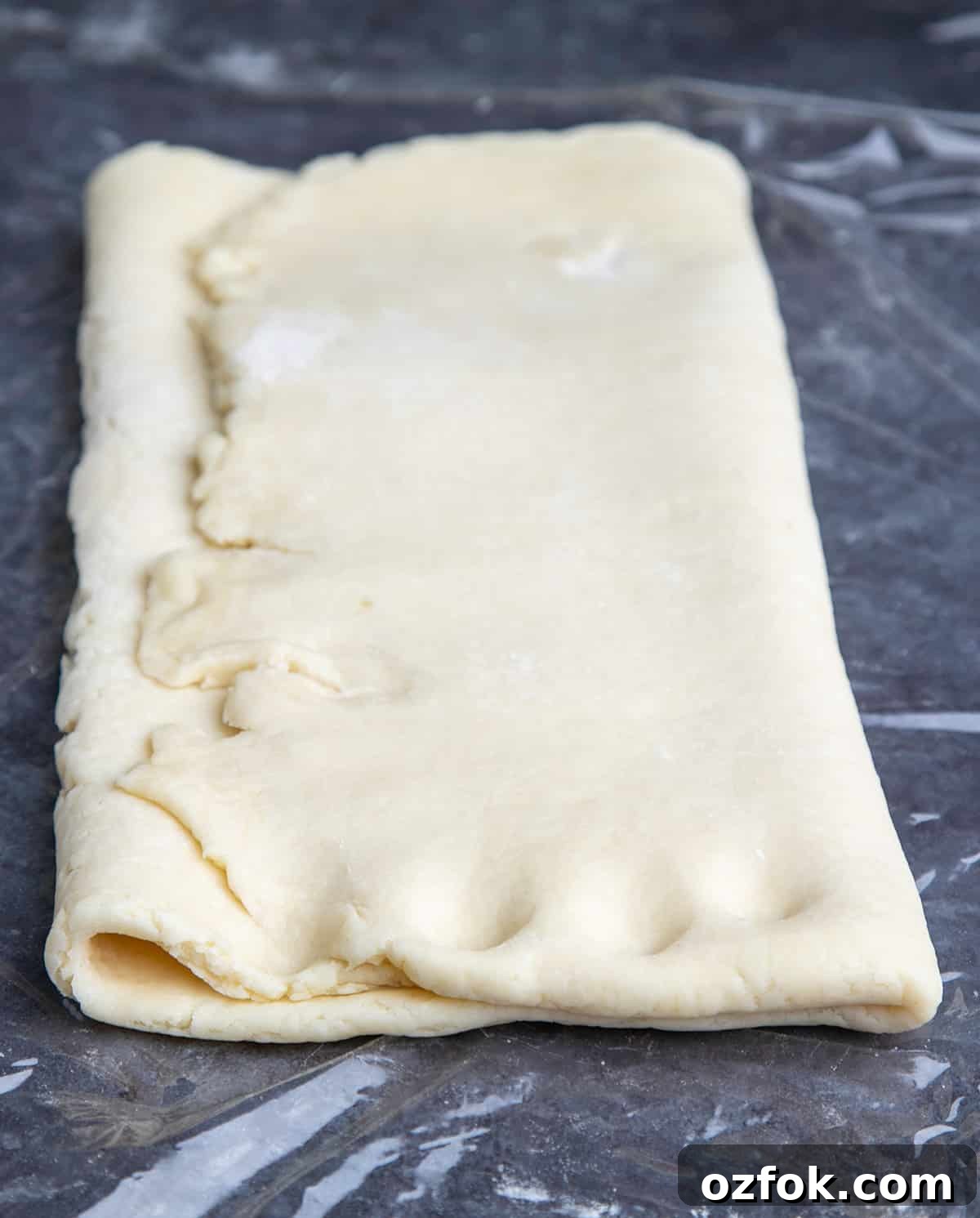
- Lightly flour and roll the dough with the butter packet into a 1/2‑inch thick rectangle. Fold into thirds like a business letter and dust with flour.
- Roll again to about 1/2‑inch, fold the left and right sides over, completing the first turn. Wrap tightly and chill at least 4 hours or overnight.
Complete remaining turns
- Repeat rolling and folding at least 4 more times (5 is ideal). Mark turns with a notch in the dough and chill 30 minutes between turns (or 10 minutes in the freezer). If dough becomes too firm to roll, let it sit a few minutes at room temperature.
Shape the croissants
- Line rimmed baking sheets with parchment. Roll the laminated dough to 1/4‑inch thickness and square the edges.
- Cut 4″x6″ rectangles, slice each diagonally into two triangles, and elongate each triangle to about 8″ from base to tip.
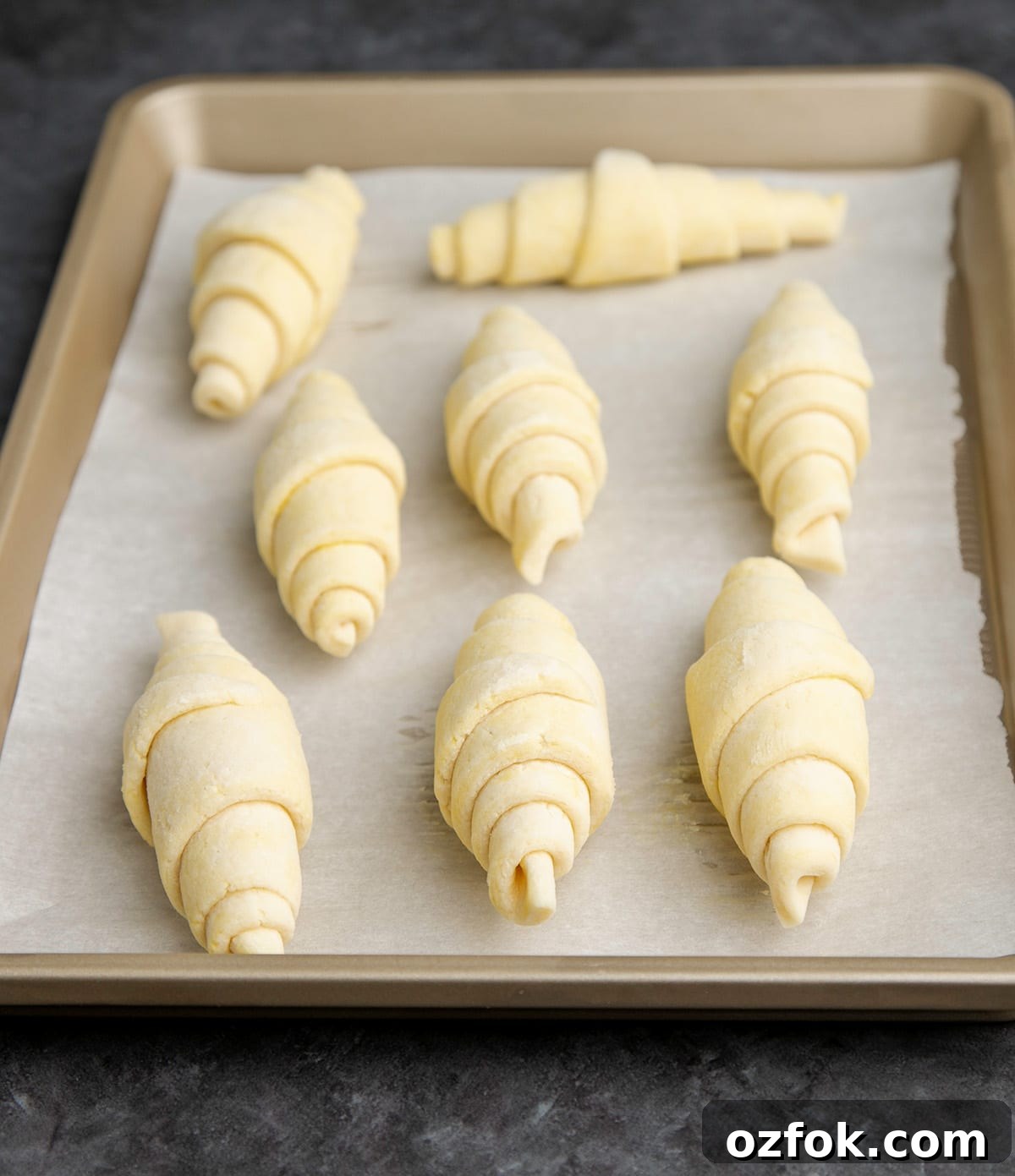
- Cut a 1/2‑inch notch at the base of each triangle, roll from base to tip, turning edges slightly outward as you roll. Place seam side down on prepared sheets, about 2″ apart.
Proof the croissants
- Cover lightly with oiled plastic wrap and proof in a warm, draft‑free place until nearly doubled and layers begin to separate.
- Brush tops and sides with egg wash, brushing from center outward with the grain of the coil to avoid sealing layers shut.
Chill and bake
- Chill the proofed croissants at least 10 minutes until mostly firm.
- Preheat oven to 400°F. Bake the chilled croissants one sheet at a time in the oven center for about 20 minutes, until deep golden and firm to the touch.
- Allow to cool briefly before serving.
Notes
About gluten‑free pastry flour: build it from your preferred all‑purpose gluten‑free blend, cornstarch, and milk powder. The recipe notes give precise weight ratios for reliable results. If your blend lacks xanthan gum, add as directed for pastry texture.
Nutrition
Serving: 1 croissant — Calories: 344 kcal (approximate)